REVIEW · POKHARA
ZipFlyer Nepal – The World’s Steepest Zip-line
Book on Viator →Operated by ZipFlyer Nepal · Bookable on Viator
One-kilometer view, then speed. ZipFlyer Nepal is known as the world’s steepest zipline, and it delivers fast, full-throttle rides with Annapurna panoramas. I like that it’s built for a real feeling of momentum, not a short thrill stop, and the longer-than-it-sounds length makes it feel worth your time. One drawback to plan around: age and weight limits are strict, so it’s not a fit for everyone.
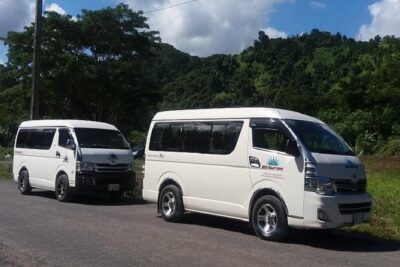
Here’s what makes the whole outing easy to pull off from Pokhara: hotel pickup from lakeside, a check-in at the lake office, then a scenic drive up to the Sarangkot launch point. You’ll also get the fun factor of dual ziplines so you can fly side-by-side, with a max group size capped at 10 people.
In This Review
- Key Things You’ll Notice Right Away
- From Lakeside to Sarangkot: How the Day Actually Flows
- Entering the Launch Zone: Sarangkot and What Makes It Special
- The ZipFlyer Run: 1.9 km Long, With Real Speed
- Dual Ziplines: Side-by-Side Flying With a Friend
- Safety Rules You Should Know Before You Arrive
- Price and Value: Is $165 Worth It?
- Timing, Weather Reality, and How to Choose Your Moment
- Who Should Book ZipFlyer Nepal (and Who Should Skip It)
- Should You Book ZipFlyer Nepal?
- FAQ
- Where does ZipFlyer Nepal take place?
- What’s included with the $165 price?
- How long does the activity take?
- How fast and how long is the zipline?
- Is the zipline solo or side-by-side?
- What are the age and weight requirements?
- Do minors need a guardian?
- What footwear is required?
- What if weather is bad?
- What’s the cancellation policy?
Key Things You’ll Notice Right Away
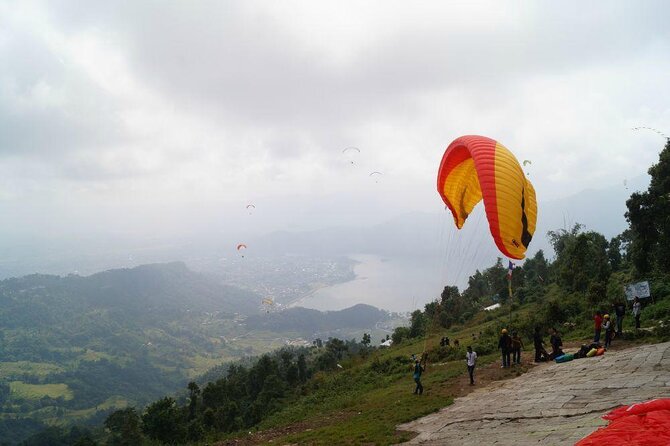
- Up to 62 mph (100 km/h): fast enough that you feel it within seconds
- 1 mile (1.9 km) of flying: long enough to enjoy the ride, not just pass through it
- 180-degree Annapurna-range views: you’re not just zooming, you’re sightseeing at speed
- Dual zipline, side-by-side runs: built for riding with a friend
- Heights of 1500+ ft at certain points: the drop is part of the drama
- Small group size (max 10): less crowd energy, more focused safety setup
From Lakeside to Sarangkot: How the Day Actually Flows
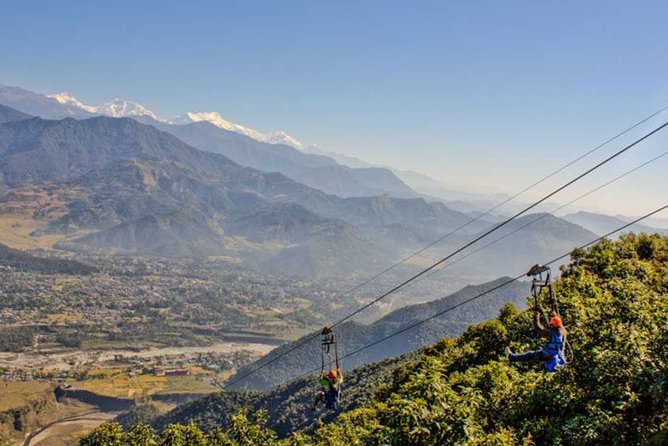
This is a simple half-day adventure, designed around one main event: the zipline run from Sarangkot. If you’re staying in Pokhara lakeside, pickup starts right from your hotel area, then you’ll check in at the operator’s office by the lake. After that, the group heads up a winding scenic road to the launch site.
What I like about this flow is how it reduces mental load. You’re not figuring out local transport, bargaining, or finding the launch point on your own. The entire package includes return transfers from Pokhara, and the ride to Sarangkot is about 30 minutes. In practice, that means you can plan your day around the experience rather than around logistics.
There’s one practical consideration: because you’re going up to a high launch area, the schedule can feel a bit weather-sensitive. The activity is described as operating in all weather conditions, but it also says good weather is required—if poor weather cancels the activity, you’ll be offered another date or a full refund. So it’s worth keeping the rest of your day flexible when possible.
Entering the Launch Zone: Sarangkot and What Makes It Special
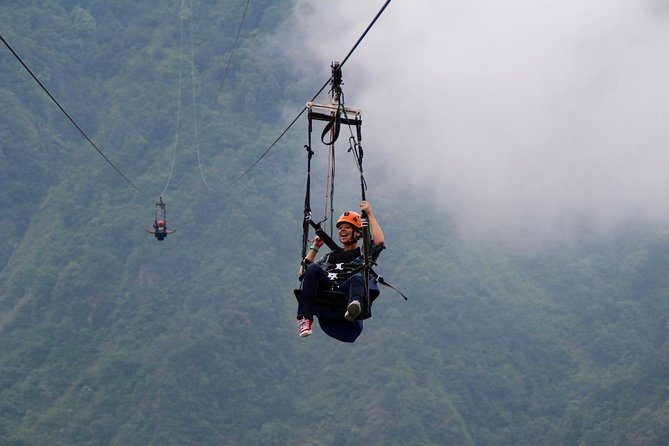
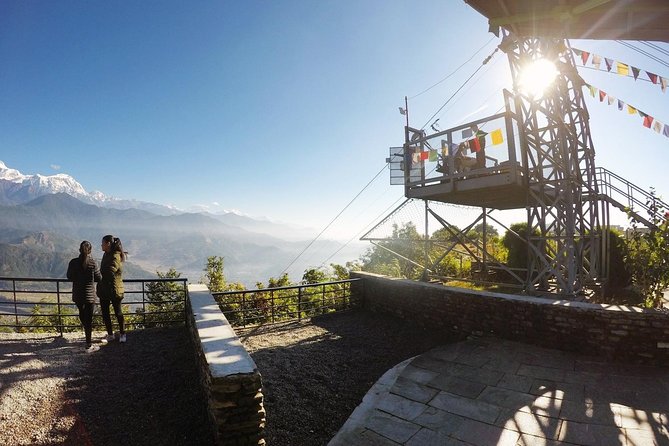
Sarangkot is the whole point of this zipline day. You’re transported from Pokhara lakeside to the launch spot, and once you’re there, you shift from travel-mode to briefing-mode. The big draw is the combination of steep engineering and mountain views.
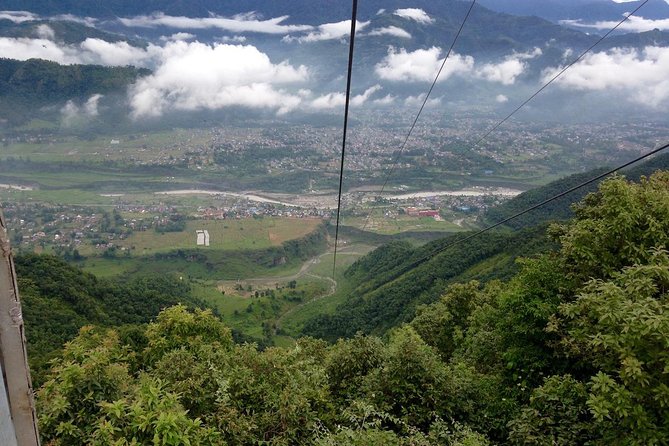
This is one of those places where the setting changes how you experience the ride. You don’t just launch off a platform in the middle of nowhere. You’re positioned to see a wide view—reported as 180-degree panoramic sights of the Annapurna range—while you’re moving fast. Even if you’re not a serious mountain person, it hits in a basic way: the speed plus the horizon line makes you look up, not down.
Also pay attention to the height. The experience notes that at certain points you’ll be 1500+ ft above the ground. That means the day isn’t “scary for a second and then over.” The height is part of the ride profile, which is great if you want adrenaline, and a deal-breaker if you don’t.
The ZipFlyer Run: 1.9 km Long, With Real Speed
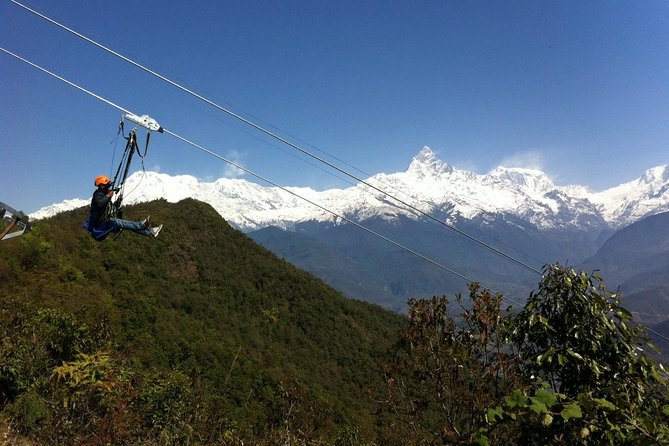
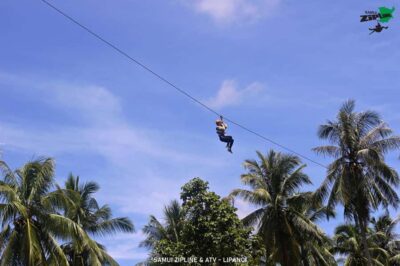
The zipline itself is billed as the world’s steepest zipline, and it’s also described as the tallest, longest, and steepest in the world. Setting aside the superlatives, the numbers you care about are clear: it’s more than 1 mile (1.9 kilometers) long, and you can reach up to 62 mph (100 km/h).
The length matters because it changes the emotional rhythm. Short ziplines tend to feel like a quick burst. Here, you’re in the air long enough to notice the surroundings and adjust to the sensation. That’s exactly what helps people who worry a zipline might feel underwhelming.
Then there’s the speed story. The information includes max speeds listed as well over 100 km/h, plus the up-to 100 km/h figure. I’d treat this as meaning: you’ll get into serious speed, and the ride won’t be cautious or slow. If you want a thrill that matches the name, this is the one.
And don’t ignore the view angle. You’re told to expect 180-degree panoramic views of the Annapurna range while you zip at speeds over 100 km/h. In plain terms, you’re not racing through a tunnel of poles. You’re flying with open sightlines.
Dual Ziplines: Side-by-Side Flying With a Friend
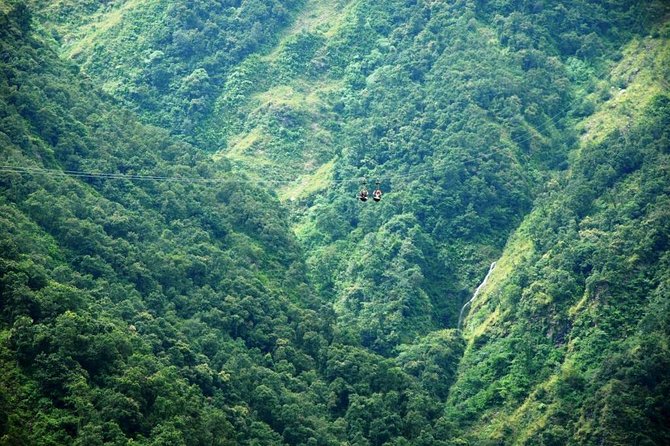
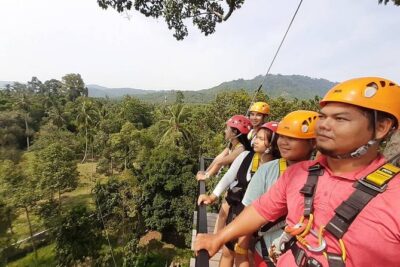
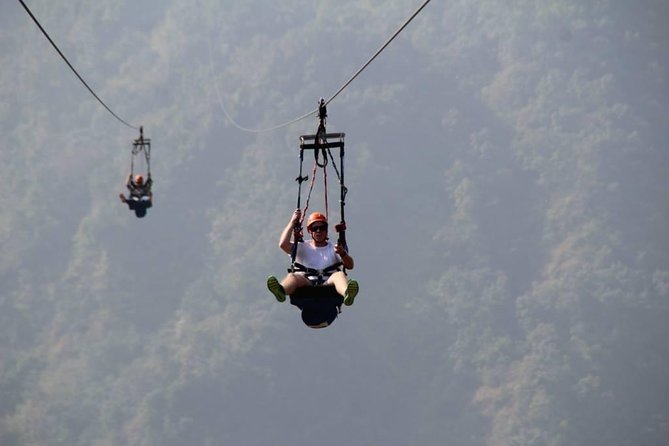
One of the smartest features for most people is the dual setup. This is a dual zipline offering side-by-side zipping, so you’re not just strapping on and going solo in silence. You can ride alongside someone, which turns the experience into a shared event rather than a personal jump scare.
That matters because it changes how you manage nerves. If you’re watching someone else clip in and launch, it can make your own start feel less random. If you’re riding with a friend, it’s also easier to enjoy the view after the first few seconds because you’re focused on the moment together.
Just keep in mind the practical part: you’ll still go through safety checks and harnessing. Dual doesn’t mean you skip the process—it means your run can be more social once the system is set.
Safety Rules You Should Know Before You Arrive
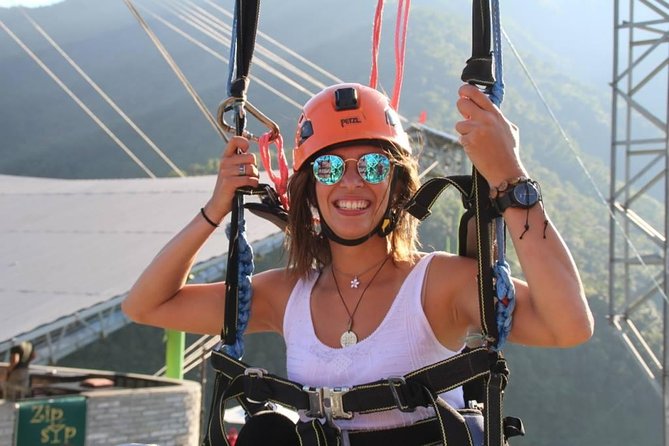
This is adventure sport, not a casual activity, so the safety requirements are not subtle.
First: closed-toe footwear is required. That means shoes you can trust on uneven ground and during harness setup. Don’t show up with sandals or loose foot coverings.
Second: there are age and weight restrictions. The minimum age is 10, with a minimum weight of 75 lbs (34 kg), and a maximum weight limit of 275 lbs (125 kg). If you’re bringing a child, this is where you’ll want to double-check fit early. There’s also a rule that a guest must be a minimum of 15 years old to zip without a guardian. And all minors age 18 and under require a guardian signature on their waiver.
Third: since parts of the ride are 1500+ ft above the ground, your comfort with heights matters. The zipline is steep. The ride is fast. If you’re anxious in high places, you should treat that as a serious factor, not as something you’ll hope to power through.
Finally: the tour is described as operating in all weather conditions, but it still requires good weather. That means you might still go forward in less-than-ideal conditions, yet you should be ready for the possibility of rescheduling if conditions are too poor.
Price and Value: Is $165 Worth It?
$165 for a 3-hour experience with return transfers can sound steep—until you break down what you’re buying.
You’re paying for:
- a zipline that’s marketed as the steepest in the world, with a long 1.9 km ride
- speeds up to 62 mph (and info indicating well over 100 km/h)
- panoramic Annapurna views while you fly
- dual side-by-side capability
- included return transportation from Pokhara lakeside
- a small group size (max 10)
For value, what really matters is the “time-to-thrill” and “thrill-to-cost” ratio. This isn’t a quick five-minute stop where you feel like you paid for a photo. A ride length of 1.9 km means you’ll spend enough time airborne for it to register as a full experience.
And the included transfers matter more than they seem. Pokhara has lots of ways to get around, but paying for your own transport on top of the activity usually adds friction and time. Here, you keep the day simple.
Also, the strong track record helps the value argument. The overall rating is 4.9 with 608 reviews and a 97% recommendation rate. That doesn’t guarantee your personal experience, but it suggests the operation is dependable and organized.
Timing, Weather Reality, and How to Choose Your Moment
The total time is listed as about 3 hours. That includes pickup, check-in, and the ride itself—plus the time you need to get outfitted and briefed.
Because the experience requires good weather while also stating it operates in all weather conditions, I treat this as a “watch the conditions” situation. If weather is borderline, your best move is to keep your plans flexible that day. If it gets canceled due to poor weather, you’ll be offered another date or a full refund. So you’re not locked in no matter what.
One more thing: the activity requires a minimum age and weight range. That means if you’re traveling with family, you’ll get the best results by planning your trip around the day your group actually meets the requirements. If you’re on the edge for age or weight, confirm early so you’re not scrambling at the launch site.
Who Should Book ZipFlyer Nepal (and Who Should Skip It)
This is a great fit if you want a serious thrill with scenery attached. You’ll especially like it if:
- you’re comfortable with heights and steep runs
- you want a longer zipline so it feels like an event
- you want to fly side-by-side with a friend
- you’re staying in Pokhara lakeside and want transfers handled for you
It’s probably not the right fit if:
- you can’t meet the age/weight rules
- heights make you panic fast
- you’re expecting a gentle, slow ride
It’s also worth noting the age rule for guardians. If someone zipping is under 15, you’ll need to think about guardian involvement because of waiver requirements.
Should You Book ZipFlyer Nepal?
Book it if your idea of a perfect Pokhara day is speed, big views, and an experience that feels substantial for the time it takes. The combination of up to 62 mph, a 1.9 km ride length, and the Annapurna panoramas is a strong trio, and the included return transfers make it low-stress to schedule.
Skip it if strict rules or fear of heights will put a damper on the whole outing. This isn’t a timid attraction. It’s steep, fast, and high.
If you’re on the fence, here’s the deciding question I’d ask: do you want a zipline that feels like more than a quick thrill? If yes, ZipFlyer Nepal is the kind of activity that usually delivers what you came for.
FAQ
Where does ZipFlyer Nepal take place?
It’s in the Pokhara area, with the zipline launch point at Sarangkot. The experience ends back at the meeting point.
What’s included with the $165 price?
The package includes return transfers from Pokhara, plus the zipline experience.
How long does the activity take?
The total duration is about 3 hours (approx.).
How fast and how long is the zipline?
You can reach speeds of up to 62 miles per hour (100 km/h). The ride is more than 1 mile (1.9 kilometers) long.
Is the zipline solo or side-by-side?
It offers dual ziplines, so you can zip side-by-side.
What are the age and weight requirements?
Minimum age is 10. Minimum weight is 75 lbs (34 kg) and maximum weight is 275 lbs (125 kg).
Do minors need a guardian?
Yes. All minors (18 and under) require a guardian signature on the waiver. Also, you must be at least 15 years old to zip without a guardian.
What footwear is required?
Closed-toed footwear is required.
What if weather is bad?
The experience requires good weather. If it’s canceled due to poor weather, you’ll be offered a different date or a full refund.
What’s the cancellation policy?
You can cancel up to 24 hours in advance for a full refund based on local time. Canceling less than 24 hours before the start time is not refundable.