REVIEW · POKHARA
Pokhara Zipline Flying
Book on Viator →Operated by Osho world Adventure · Bookable on Viator
Flying over Sarangkot is a real wow moment. This Pokhara zip line sends you from the heights above Phewa Lake and into the forest, with the Annapurna range in front and dramatic drops below. I love the way the ride lines up with icons like Machhapuchhre and the Seti stream, so it feels like sightseeing with speed.
What I like most is the built-in comfort level: you wear a proper harness, get clear guidance from the team, and the operation runs like a system from hotel pickup to the final landing. It is also offered as a calm family-and-couple adventure, not only an extreme-buff mission, with a small group size capped at 12 travelers.
One thing to watch: the actual flying time can be short compared to the full time you’ll spend at the start point, so if you hate waiting around, plan your patience in advance.
In This Review
- Key things to know before you go
- From Lakeside to Sarangkot: what the morning setup feels like
- The ride’s big numbers (and what they mean for you)
- Taking off: harness, timing, and the views to hunt for
- The landing in Hyangja and how the full 2.5 hours happens
- Safety and professionalism: what you should look for on arrival
- Who should book this zip line in Pokhara (and who should reconsider)
- Value check: is $111.12 worth it?
- A few practical tips that make a difference
- FAQ
- What location is the zip line in?
- What time does the tour start?
- How long is the experience?
- Does the price include pickup from my hotel?
- Is food included?
- Do I get a mobile ticket?
- How many people are in the group?
- What’s the zip line length and drop?
- Are service animals allowed?
- Is there free cancellation?
- Should you book Pokhara Zipline Flying?
Key things to know before you go
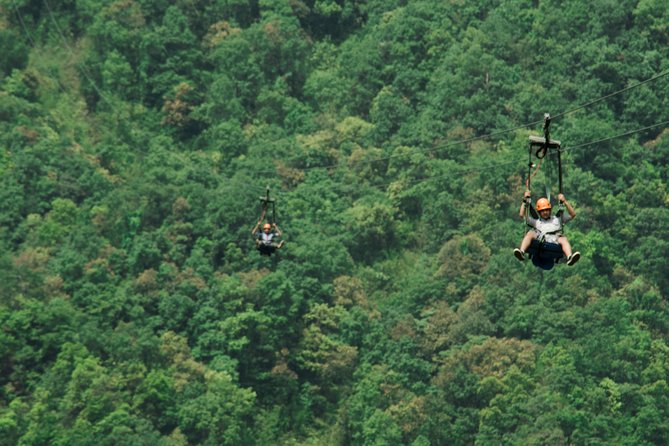
- Sarangkot launch point: The ride runs from Sarangkot at about 1,592m, with dramatic views over Pokhara and the Annapurna range.
- Serious ride stats: 1.8 km total length, about a 600 m vertical drop, and a steep 56% incline.
- Small-group flow: Two guests can launch right away, then others follow—so you’re not stuck waiting forever in a huge crowd.
- Fast, loud, and high: The ride can hit around 100 mph, so bring earplugs if you’re sound-sensitive.
- Hotel pickup included: The tour includes transport from your Pokhara hotel and a drive up to the start.
From Lakeside to Sarangkot: what the morning setup feels like
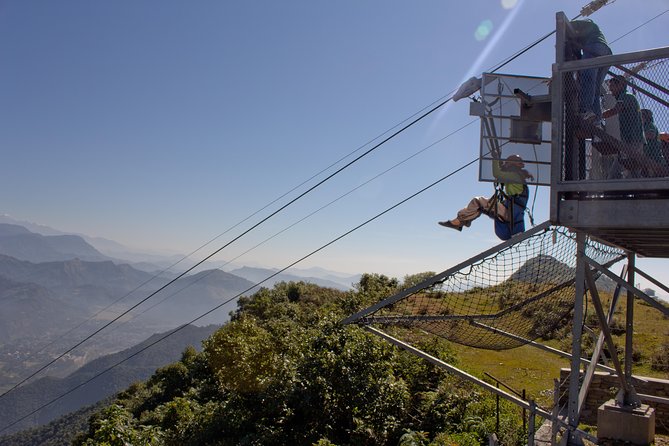
Your outing starts in Pokhara, with pickup from your hotel. From there, you’ll ride up to Sarangkot, a hill station area that’s famous for big mountain and lake views. The start time is 9:15am, so this is a morning plan, not a late-day slot.
Once you’re up the side, your guide can talk you through the village areas along the way. That matters more than it sounds. If you only focus on the zip line itself, you can miss the best part of Sarangkot: the slow build-up to altitude and the sense of opening views. It also helps settle your nerves before you strap in.
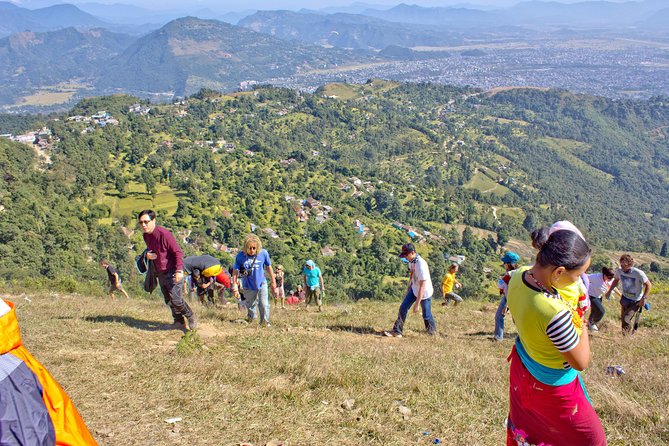
At the top, you’ll take a brief walk toward the waiting area near a Butterfly collapsible shelter. From there, you’ll get a look around at the Himalaya backdrop and the mountains framing the horizon. This pre-ride pause is one of the reasons the experience feels more memorable than a straight sprint from ticket to platform.
The ride’s big numbers (and what they mean for you)
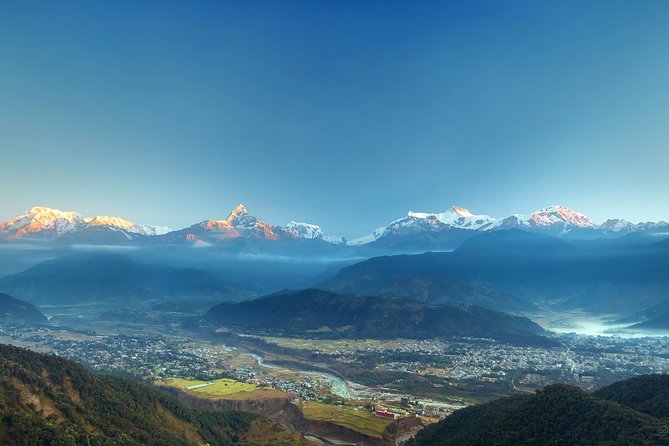
This zip line isn’t marketed as a gentle glide. The key figures are hard to ignore: the line is 1.8 kilometers long, with a vertical drop of about 600 meters, plus a 56% incline.
Those numbers translate into three practical things you’ll feel:
- Speed builds fast after launch, and the ride can reach around 100 mph.
- You’ll pass over a dense forest below, so you get motion and depth at the same time, not just a view from one angle.
- The drop is the main thrill. You aren’t just moving forward; you’re descending at a serious rate, and that’s where the adrenaline comes from.
You’ll also be sitting in a harness setup designed for control and safety. The goal is to let you look around (when you can) while still feeling secure. If you’re nervous about heights, the ride’s structure plus the clear operator flow can make it easier to trust the moment.
Taking off: harness, timing, and the views to hunt for
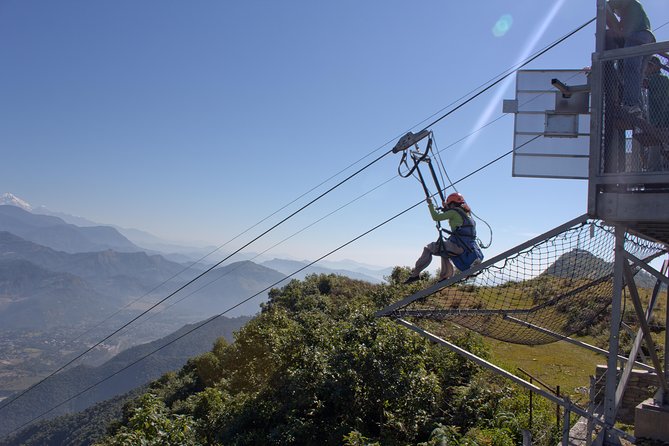
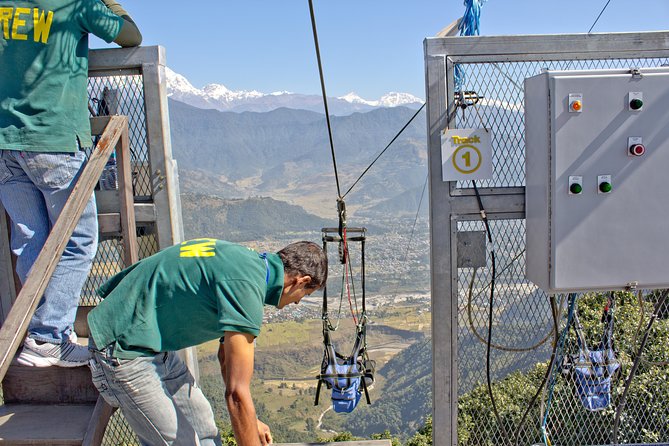
At the top station—around 5,400 feet above water level—you’ll get harnessed and wait for the launch. Two guests may launch right away, then the next group follows. That stagger matters because it helps the team manage weight and timing without rushing the process.
When your turn comes, it’s quick: you count down and then you’re off. The motion goes from calm waiting to fast descent in seconds, so have your eyes ready if you want the best photo angles.
This is the part where you’ll want to actively look for landmarks:
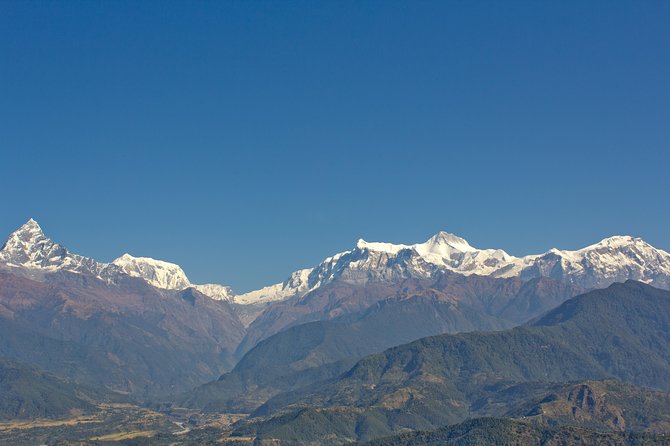
- Machhapuchhre (Fishtail): this is one of the most striking peaks in the region, and it often shows up clearly in the backdrop during the ride.
- Annapurna range: you’ll be flying with the mountains in front, not hidden behind clouds or trees.
- Seti stream: people describe it as visible during the pass, and it adds a real sense of scale to the forest below.
Also, remember the speed is high enough that wind noise is part of the experience. If you get bothered by loud sound, earplugs are a smart idea.
The landing in Hyangja and how the full 2.5 hours happens
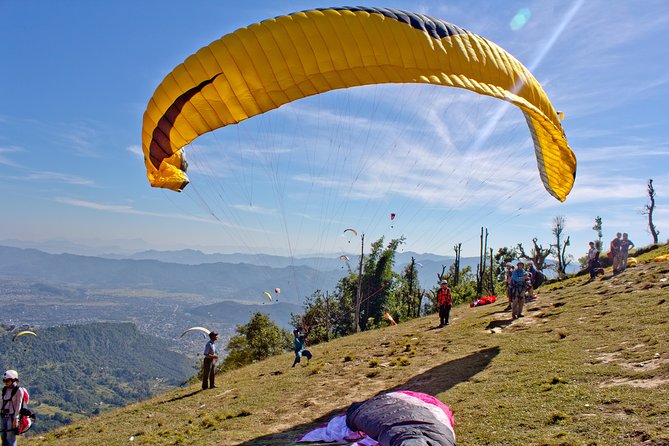
Your flight doesn’t end at the platform. The ride concludes with a break landing in the village of Hyangja. That landing point is part of why the day feels like a small journey rather than only a single line you ride and leave behind.
The tour duration is listed as about 2 hours 30 minutes. Here’s the practical note: the total time includes the drive up, the harnessing and waiting, and the time the operation takes to run the line for multiple small groups. The flying itself can feel brief compared with the total block of time, so you’ll want to bring a good mindset.
If you’re the type who plans your day minute-by-minute, this is where you might feel friction. But if you’re okay with a mountain morning rhythm—views, short waiting, then speed—it tends to feel like a fair trade.
One more small detail: the ride description talks about waiting with lunch, but food and drinks are listed as not included. So you can plan to buy or eat separately before or after, depending on your schedule.
Safety and professionalism: what you should look for on arrival
Even though zip lines are exciting, you should still judge the setup like a grown-up. The ride uses a special harness seat, and the operation is described as professional from pickup to the experience.
When you arrive at the top station, check for the basics:
- Do you get a harness fitted properly and explained before you go?
- Does the team keep the platform area organized and calm?
- Do instructions sound clear about how the launch works?
The best sign here is the flow. When staff are organized, your wait feels less scary and more like part of the routine. People also mention feeling safe and looked after, including those who weren’t originally sure about heights.
If you’re bringing a service animal, that’s allowed. And in general, the activity says most people can participate, which usually means the operator isn’t turning away casual, healthy visitors.
Who should book this zip line in Pokhara (and who should reconsider)
This is a strong fit if you want:
- Big mountain scenery tied to a fast activity (not just a calm viewpoint).
- A clear thrill with serious descent stats and high speed.
- A short trip from central Pokhara with hotel pickup included.
It’s also a good match for couples. The ride is short enough to share as a story right away, and the views give you something to talk about during the descent and after on the landing side.
Consider thinking twice if:
- You hate waiting around. If you expect the flying part to take up most of the 2.5 hours, you might feel annoyed.
- You’re sensitive to wind noise. Earplugs help.
- You prefer quieter activities. The ride hits speed quickly and can feel intense even for people who say they like adventure.
Value check: is $111.12 worth it?
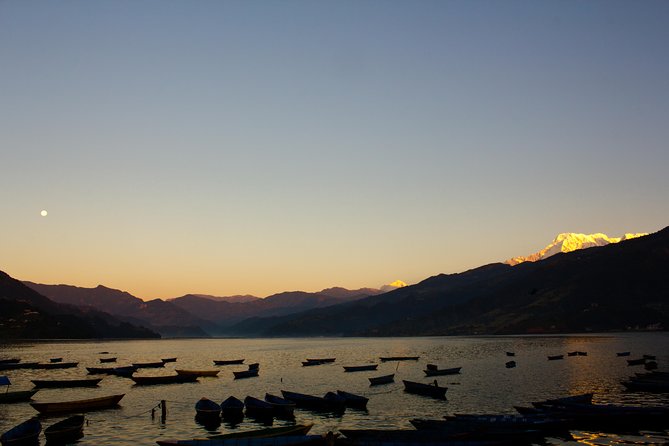
The price is $111.12 per person, and food and drinks aren’t included. So the value question becomes: are you really paying for just a single ride?
You are paying for three things at once:
- Transport from your Pokhara hotel up to Sarangkot and back.
- A high-spec zip line with serious stats: 1.8 km length and 600 m vertical drop.
- A full morning experience built around a controlled operation and small-group flow.
Is it cheap? No. But it can still feel fair if you compare it to other zip line options in different countries, especially when those don’t include hotel pickup. In other words, you’re not only buying a thrill; you’re buying convenience plus a world-class-feeling ride profile.
If your budget is tight, you can still do Pokhara on the cheap. But if you’re already planning one standout adrenaline-and-views activity, this is built for that role.
A few practical tips that make a difference
- Wear comfortable clothes you can move in. You’ll be fitting into the harness area first, then watching the line start in moments.
- Bring earplugs if you’re sensitive to loud wind. It can be intense at around 100 mph.
- Keep a light plan for the day. This activity is about a half-day block, even if the flying is shorter.
- Bring a calm mindset about waiting. The operation is designed to run in small batches, and that takes time.
- If you want photos, think about timing. The best views are during the pass, but you might also end up focusing on balance and direction once you launch.
FAQ
What location is the zip line in?
It’s in Pokhara, Nepal, and the launch area is Sarangkot.
What time does the tour start?
The start time is 9:15am.
How long is the experience?
It’s listed as about 2 hours 30 minutes (approx.).
Does the price include pickup from my hotel?
Yes. Pick up from Pokhara Hotel and drive to Sarangkot are included.
Is food included?
No. Food and drinks are not included.
Do I get a mobile ticket?
Yes. A mobile ticket is part of the experience.
How many people are in the group?
The tour has a maximum of 12 travelers.
What’s the zip line length and drop?
It’s 1.8 kilometers long with about a 600 meters vertical drop.
Are service animals allowed?
Yes. Service animals allowed.
Is there free cancellation?
Yes. Free cancellation is available, and you can cancel up to 24 hours in advance for a full refund.
Should you book Pokhara Zipline Flying?
Book it if you want one high-impact activity that mixes speed with serious Himalayan views, and you like the idea of being transported from your hotel without extra planning. The ride’s length, steepness, and drop are the headline for a reason, and the harness setup plus organized operation make it feel more trustworthy than a random “adventure” you might worry about.
Skip it or schedule it carefully if your biggest issue is waiting. The day can stretch longer than the actual flying moment, so go in expecting a mountain-morning routine, not just a quick thrill and leave. If that matches your style, this is the kind of Pokhara experience you’ll remember for a long time.