REVIEW · PUNTA CANA
Zip Line – Half Day Adventure
Book on Viator →Operated by AJC BAYAHÍBE TOURS · Bookable on Viator
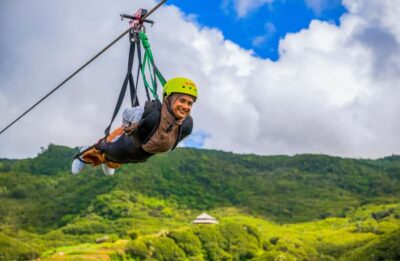
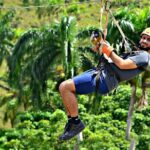
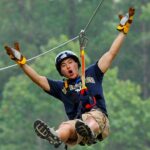
Flying through the rainforest feels unreal. This half-day Punta Cana zipline adventure pairs long zipline runs with a safety-first setup and guided steps, so you’re not just dropped at a platform and told good luck. You’ll also get the chance to end with Cable Mega Splash, including a water landing.
One thing I really like is the way the safety system is built around you the whole way. You’re equipped with harnesses and helmets, and you’re connected to a lifeline before the first platform—released only when you reach the last line of the circuit. The guides also handle the “gear and ready” part so you can focus on the ride.
A possible drawback: pickup and timing depend on the operator. There have been documented cases of no-show or confusing driver behavior, so I’d confirm the pickup details early and keep your start time firm in your mind.
In This Review
- Key things that make this zipline tour worth a look
- Punta Cana’s zipline circuit with real “wow” moments
- Safety you can understand: dual cables, lifeline, and anti-drop tech
- The 4-hour flow: pickup, gear fitting, briefing, and your first climb
- How many rides are you actually getting? 6-line core plus up to 12 ziplines
- Himalaya bridge and what to expect when you’re up there
- Cable Mega Splash: the water landing part of the ride
- The vibe on the course: pro guides, calm pacing, and personal help
- Value for $80: when the safety setup and water landing justify your time
- Watch-outs: stairs, weather, and pickup surprises
- Who should book this zipline adventure?
- Should you book this zipline in Punta Cana?
- FAQ
- How long is the Zip Line half-day adventure in Punta Cana?
- Do they offer pickup from hotels?
- What safety equipment is provided?
- What is the physical fitness requirement?
- How many people are in the group?
- What happens if the weather is poor?
- What is the cancellation window?
Key things that make this zipline tour worth a look
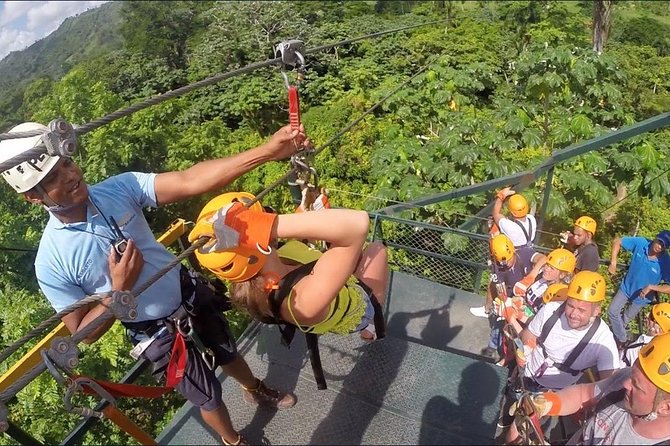
- Dual-line + lifeline safety approach: you’re attached before the first platform and remain protected until the final line.
- Automatic anti-drop for vertical sections: extra protection is built in if something unexpected happens.
- Punta Cana’s big highlight: Cable Mega Splash: you’re not just flying over land; you end with a water landing.
- Up to 12 ziplines in the overall experience: the core circuit includes 6 lines plus a Himalaya bridge.
- Small-group feel (max 20): easier to stay oriented and get help from the guides.
Punta Cana’s zipline circuit with real “wow” moments
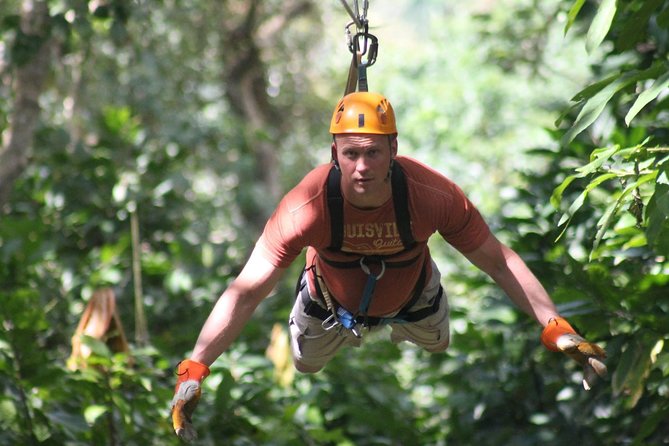
If you’re picturing a standard zipline—short runs and lots of waiting—this one is trying to feel different. The big theme here is speed and variety. You’re set up for a circuit that includes multiple lines (the core described route is 6 lines), a Himalaya bridge, and a signature ending with Cable Mega Splash and a water landing.
The experience is designed for a half-day block in Punta Cana, with an approximate total time of 4 hours. That’s long enough to feel like an actual outing, but short enough that you don’t lose the rest of your day to transportation, check-in, and gear changes.
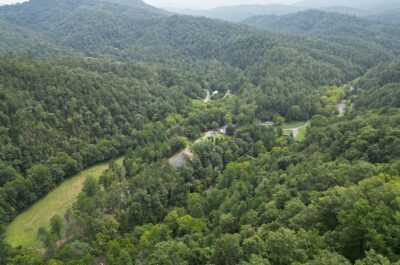
And yes, it’s in rainforest terrain. The whole point is getting that overhead glide feeling—then topping it off with a splash finish, not just one “photo spot” and done.
Safety you can understand: dual cables, lifeline, and anti-drop tech
This is where the tour makes its strongest case.
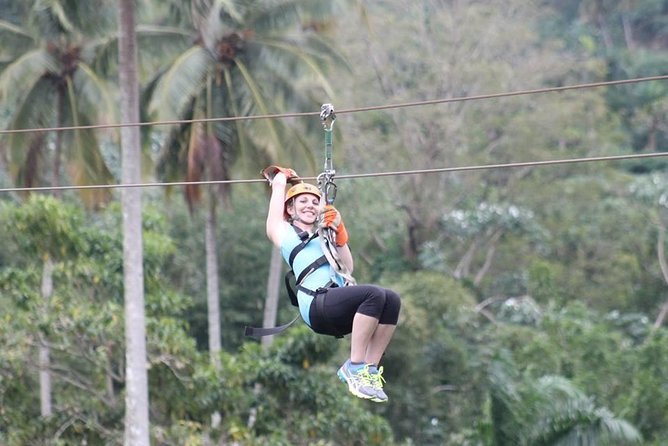
You’ll be wearing harnesses and helmets (the information lists Petzel helmets and harnesses). The course setup uses fixed-line equipment from Continuous our Life. What matters for you isn’t the brand name—it’s the system logic.
Here’s what the operator describes as the key safety features:
- Dual line cables plus a lifeline at the same time.
- You’re attached to the lifeline before entering the first platform.
- You’re only released upon arrival to the last line of the circuit.
- For vertical promotions, you’re attached to an automatic anti-drop device.
For a first-timer, that combination can reduce the fear factor. You still need to stay alert, follow instructions, and move when the guide says move—but knowing you’re connected from early on can make the whole experience feel less chaotic.
It also helps that they mention daily checks of equipment and infrastructure based on manufacturer manuals, plus highly trained staff and clear instruction. That’s the kind of boring-sounding stuff you want to hear with adventure activities.
The 4-hour flow: pickup, gear fitting, briefing, and your first climb
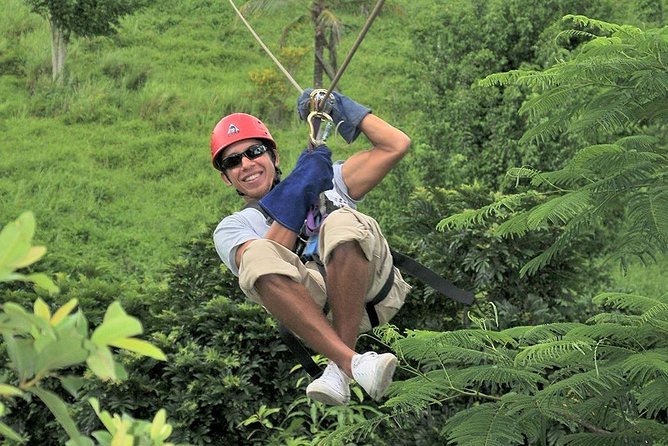
Your day starts with hotel pickup being offered for many locations. It’s not guaranteed for every hotel, so check whether your specific one is on the pickup list before you assume you’ll be collected. The tour uses a mobile ticket, which typically helps cut down on back-and-forth at check-in.
Once you arrive at the site, the routine is pretty straightforward:
- You’ll receive safety briefings.
- You’ll get help with equipment (harness and helmet fitting).
- You’ll be guided through how to clip in and ride each segment.
A note on the physical side: this isn’t “sit and fly.” The tour asks for moderate physical fitness, and that includes climbing and moving between platforms. One of the clearest practical tips from past participants is that you should be ready for a lot of stairs—bring a calm attitude and pace yourself.
The group size is kept to a maximum of 20. In real life, that can mean faster transitions, and it’s easier for guides to spot who needs extra help.
How many rides are you actually getting? 6-line core plus up to 12 ziplines
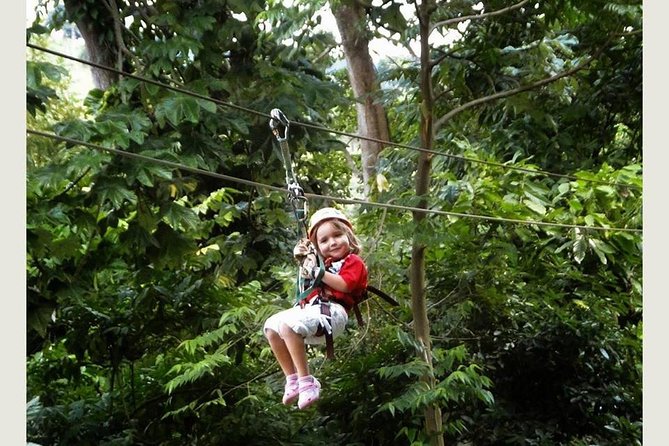
The tour info describes two layers: an overall “up to 12 ziplines” highlight, and then a specific circuit description that includes 6 lines, a Himalaya bridge, and Cable Mega Splash.
So how should you interpret that?
- Think of the main promise as a big set of rides (the highlight list calls out 12 ziplines, including the Mega Splash).
- Think of the “core circuit” as the structured route you’ll go through, with 6 lines plus the bridge and water landing.
Either way, the value is in variety: you’re not repeating the exact same stretch over and over. You get different platform moments, different angles, and one of the few zipline experiences in the region that includes ending with water.
Himalaya bridge and what to expect when you’re up there
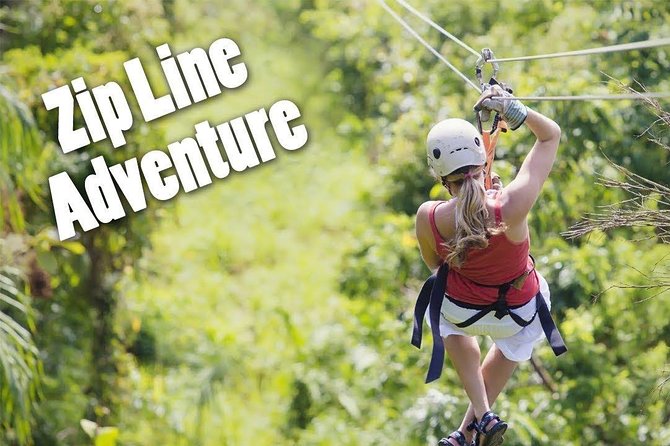
One of the circuit features is the Himalaya bridge. The tour description doesn’t go deep on the mechanics, but it does make clear that this is part of the flow between zip segments.
Why this matters for you: bridges and platform transitions tend to be the moments where people feel most “in their head.” The best way to handle it is simple—listen to your guide, keep your eyes on where you’re stepping, and move when it’s your turn. You don’t need to rush. You do need to stay present.
Also, if you’re the type who gets nervous at heights, remember the tour’s setup keeps you attached through the sequence using the lifeline system. That can make the “walking/transition” parts feel less exposed.
Cable Mega Splash: the water landing part of the ride
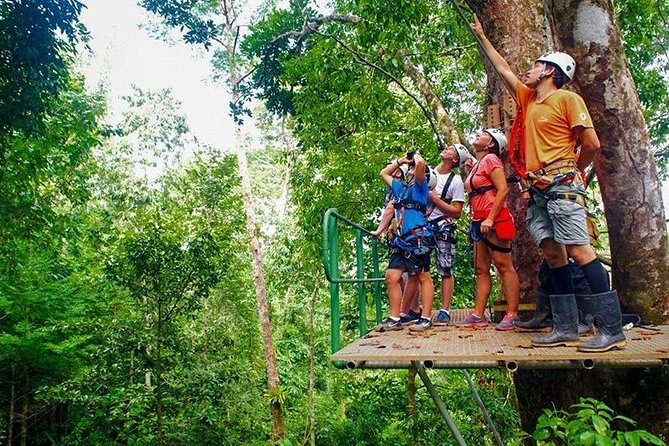
Cable Mega Splash is the headline segment, and it includes a water landing. That changes the whole vibe. Instead of the usual “zip, pose, stop,” you’re finishing with a physical landing element that can feel both fun and a bit unexpected.
Practical advice for this part:
- Wear gear you’re okay getting damp in.
- If you have swimwear, it’s often a smart pairing (since you’ll end in water).
- Bring a way to change after. Even if you don’t know exactly how wet you’ll get, you can plan for it.
The upside is that it turns the experience into a memory you’ll actually talk about later. In adventure terms, it’s a natural “chapter ending.”
The vibe on the course: pro guides, calm pacing, and personal help
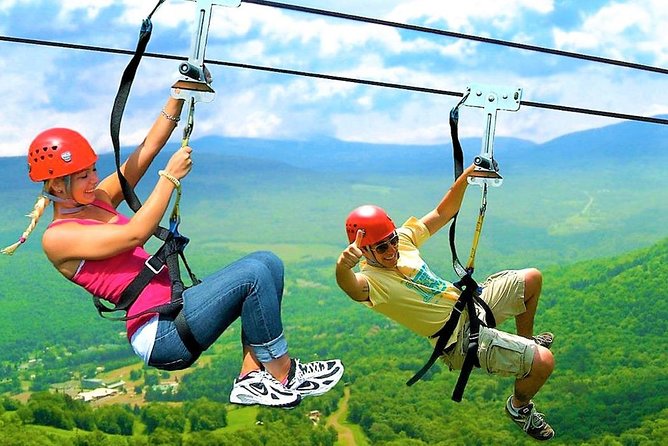
From the people-side, the feedback you can act on is pretty clear: the guides are friendly and focused on making you comfortable.
One name that comes up is Carlos, who (along with his team) made some participants feel confident with personal attention and patience. If you’re traveling with questions—about how the harness feels, how the clip-in works, or how to handle the stairs—this kind of guide attitude can matter more than extra marketing.
Also, if you end up as the only group there (it can happen), the pace can feel faster and more relaxed. Even if you’re not that lucky, the max-20 group size means you’re less likely to spend your whole time waiting while the line moves like a theme park.
Value for $80: when the safety setup and water landing justify your time
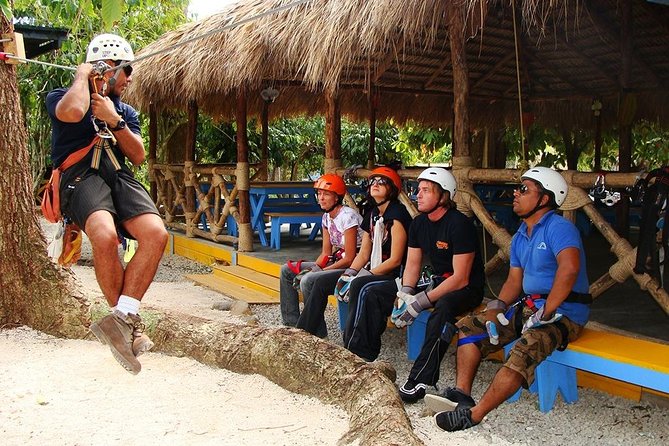
At $80 per person for about 4 hours, the price is in the “serious activity” category. So the question is: does it earn that money?
Here’s what you’re buying:
- Multiple zip segments (a core of 6 lines, plus the overall promise of up to 12).
- A structured safety system that uses dual cables and a lifeline through the sequence, plus an automatic anti-drop device.
- Pro guidance with equipment setup and safety briefings.
- A signature finish with Cable Mega Splash and a water landing.
- Hotel pickup for many areas, which reduces logistics stress.
If you’re paying extra to reduce risk and increase confidence, this tour’s safety design is part of the value—not just the thrill factor.
If you’re mainly looking for the cheapest option to say you did it, you might find lower-cost ziplines elsewhere. But if you care about how the safety system is engineered and you want a memorable ending, $80 starts to look reasonable.
Watch-outs: stairs, weather, and pickup surprises
This is where I’d keep your expectations grounded.
Stairs and movement: You need moderate physical fitness. You’ll likely be climbing a lot of stairs to reach platforms. Go slow, drink water when offered, and don’t try to “prove something” on the first climb.
Weather matters: The activity requires good weather. If it’s canceled due to poor weather, you’ll be offered a different date or a full refund. That means your day plan should be flexible if you’re in Punta Cana only briefly.
Pickup reliability: There are documented cases of the operator not showing up or not replying to messages, and there’s also a complaint about the driver making an unexpected stop. I can’t sugarcoat that. If you book, confirm your pickup details early, and keep the local start time close to your internal clock. If you’re the type who hates uncertainty, build in a little buffer on the day.
Who should book this zipline adventure?
I think this tour is a great match if you:
- Want a half-day adrenaline hit without needing a full-day commitment.
- Appreciate safety systems with built-in protection and clear guidance.
- Like the idea of ending with a water landing rather than a dry stop.
- Prefer a small group (max 20) where guides can actually help.
You might want to rethink it if you:
- Have trouble with stairs or moderate physical activity.
- Need absolute certainty about pickup timing and communication (since there are negative reports out there).
- Are traveling with very young kids or anyone who can’t follow safety instructions. (The tour data only says moderate fitness; it doesn’t list age ranges.)
Should you book this zipline in Punta Cana?
If you want a memorable zipline circuit with a safety setup you can actually understand—and a real “final scene” with Cable Mega Splash—this is worth your consideration. The dual-line and lifeline approach is a big selling point, and the max-20 group size helps keep it manageable.
If you’re booking on a tight schedule or you hate uncertainty around pickup, I’d confirm early and plan a little slack into your day. Do that, and you’re set up for a fun ride that’s more than just another tourist checklist item.
FAQ
How long is the Zip Line half-day adventure in Punta Cana?
It’s approximately 4 hours.
Do they offer pickup from hotels?
Yes, pickup is offered for many hotels. You should check whether your hotel is on the pickup list.
What safety equipment is provided?
You’ll be equipped with harnesses and helmets.
What is the physical fitness requirement?
You should have a moderate physical fitness level, including the ability to climb and move between platforms.
How many people are in the group?
The tour has a maximum of 20 travelers.
What happens if the weather is poor?
The experience requires good weather. If it’s canceled due to poor weather, you’ll be offered a different date or a full refund.
What is the cancellation window?
You can cancel up to 24 hours in advance for a full refund. If you cancel less than 24 hours before the start time, the amount paid is not refunded.