REVIEW · NIZWA
Via Ferrata And Zip Line
Book on Viator →Operated by WikiTours Adventures · Bookable on Viator
Jebel Akhdar turns a hike into real adrenaline. This via ferrata + zip-line combo in Oman is built for different comfort levels, with a route that uses fixed cables, ladders, and a harness system. You get jaw-dropping mountain views while you work your way along a steel-lined climb that’s about 180 meters long and up to 45 meters high. It ends with a zip-line ride back, so you trade sweat for speed.
What I like most is how safety is taken seriously without slowing the fun down: you get a helmet, safety equipment, and a dedicated via ferrata instructor plus a first aider on hand. I also like that the guide names show up again and again in praise, like Maher, Khalifa, Said, Ali, and Mehmood, which usually means consistent leadership. One thing to consider: you need a moderate fitness level and a willingness to handle heights, even if the staff can make nervous first-timers feel more comfortable.
In This Review
- Key things to know before you go
- Via Ferrata in Jebel Akhdar: what it really feels like
- Iron Bridge, Steel Rope, Stair Way: where the challenge shows up
- Iron bridge: the mental checkpoint
- Steel rope: using control instead of strength
- Stair way: finishing the effort with momentum
- The zip-line return: turning nerves into speed
- Guides, safety gear, and how they calm first-time nerves
- Who this adventure suits in Oman (and who should think twice)
- Timing, start location, and how to plan your day
- Price and value: is $150 fair for via ferrata + zip-line?
- Weather matters more than you think
- Should you book this Jebel Akhdar via Ferrata and zip-line?
- FAQ
- Where does this activity start and end?
- How long does the via ferrata and zip-line take?
- How much does it cost?
- What exactly is included for safety?
- Is a zip-line included after the via ferrata?
- What are the via ferrata route details?
- What fitness level do you need?
- Do they offer transport from Nizwa or Muscat?
- What happens if the weather is poor?
Key things to know before you go
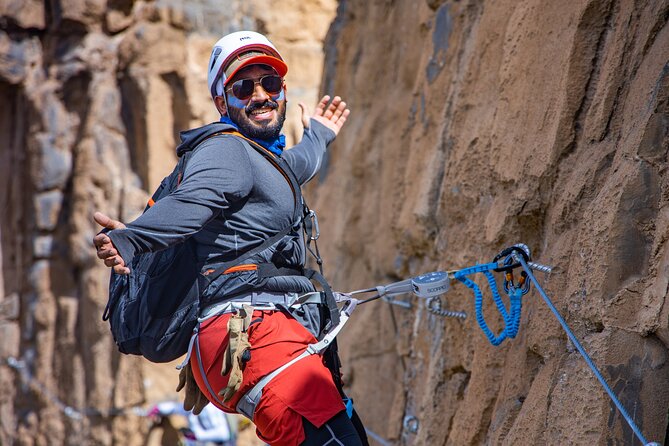
- 180m via ferrata route, up to 45m high: expect a real vertical feeling, not a casual stroll.
- Three sections: Iron bridge, Steel rope, and Stair way, so the climb doesn’t feel one-note.
- Zip-line return: you finish the experience with a fast ride back after the climb.
- Small group cap (max 20): you’re not getting swallowed by a huge crowd.
- Safety gear included: harness setup guidance, helmet, and a first aider are part of the package.
- Works for beginners to advanced: people report everything from first-time climbs to advanced courses.
Via Ferrata in Jebel Akhdar: what it really feels like
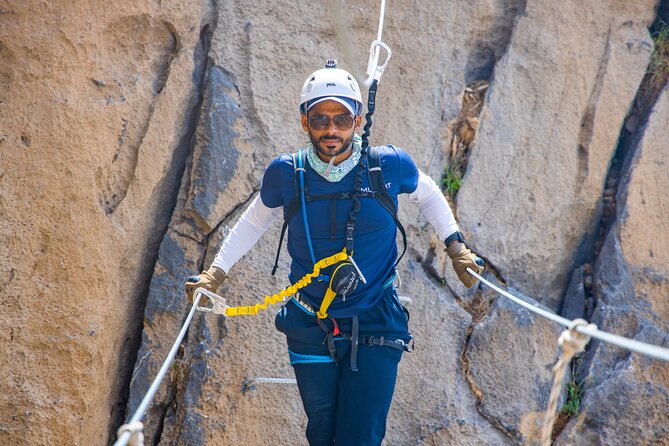
Jebel Akhdar is the kind of place where a normal view becomes a reason to move. This activity turns that into a mission. The via ferrata uses fixed steel cables and metal elements attached to the rock. You clip in with a harness and leash, so you’re not free-climbing in the wild. It’s a controlled climbing route, but it still feels exposed, especially on the bridge and rope sections.
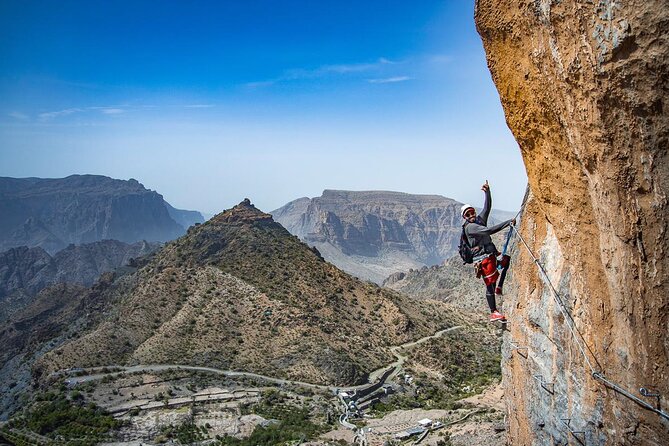
The route is listed as about 180 meters long, with heights up to 45 meters. That matters because it changes how you experience the air and the footing. Even if you’re not an athlete, your brain will notice the drop and the distance. The good news is that the setup is designed to guide you step-by-step along a prepared line. Reviews repeatedly mention that staff help with a learning curve that feels steady, which is exactly what you want when your hands are tired and your legs are deciding whether this is a good idea.
This isn’t a stunt where you’re just along for the ride. You’ll be actively using the metal holds and cable system. So you’ll want to show up ready to move, not just ready to pose. If you’ve got a fear of heights, you might still enjoy it, but plan on working through that moment-to-moment. The guides are clearly used to that mix—nervous and excited—at the same time.
Iron Bridge, Steel Rope, Stair Way: where the challenge shows up
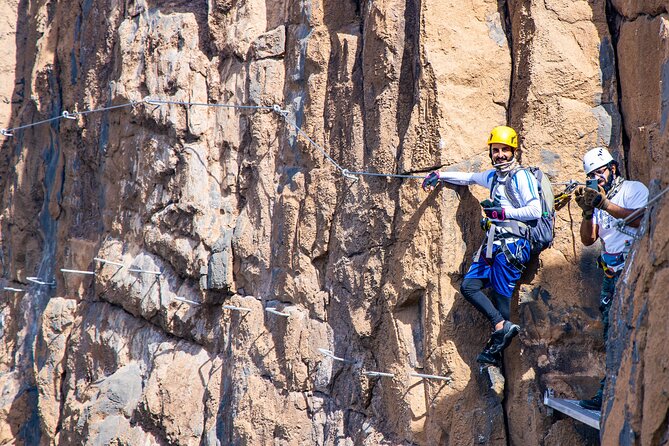
Your via ferrata is divided into three parts: Iron bridge, Steel rope, and Stair way. The way these segments are described tells you the tour isn’t just “walk and hold.” Each section has a different feel, so your challenge changes as you go.
Iron bridge: the mental checkpoint
The iron bridge is the part where most people’s brains start doing math. You’re on a fixed metal crossing, but the exposure is the point. If you’ve ever frozen at the edge of something high, this is where that feeling might pop up again. The helpful part is that the safety system keeps you clipped in, and the instruction is there to keep you from guessing.
In real terms, this segment is where you’ll learn what your comfort level actually is. Not what you wish it was. What it is. Guides like Maher and Ali show up in praise for making people feel safe and guided, which helps when your thoughts start shouting over your footing.
Steel rope: using control instead of strength
The steel rope section shifts the focus from walking to controlled movement. The cable system is part of the structure, and you’ll likely rely on holding the cable and using it for stability. One review even points out that several places rely on holding the cable and pulling out, which is the kind of detail that helps you mentally prepare.
This is also a good reminder: via ferrata isn’t only about legs. Your arms and shoulders do more work than you expect. So even if you’re not a climber, you’ll feel it in your upper body.
Stair way: finishing the effort with momentum
The stair way section is where the route often starts to feel more rhythmic. Stairs can be deceptively tiring when you’re clipped in and concentrating. This is the part where fatigue might creep in, especially if you’re doing your first via ferrata and you’re learning technique on the fly.
But there’s also a payoff. Reviews mention a good mix of challenging and fun. The stair section is usually where you stop negotiating with yourself and start moving with confidence.
The zip-line return: turning nerves into speed
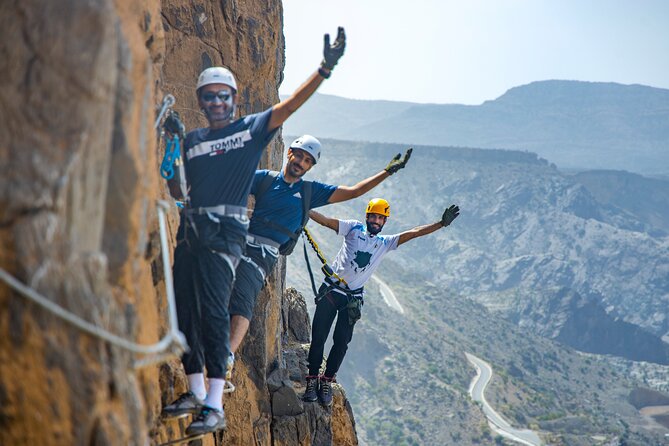
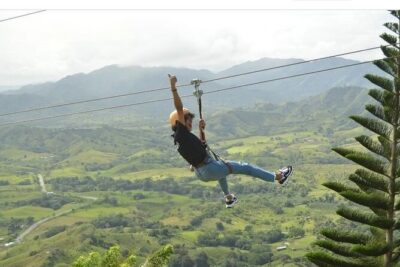
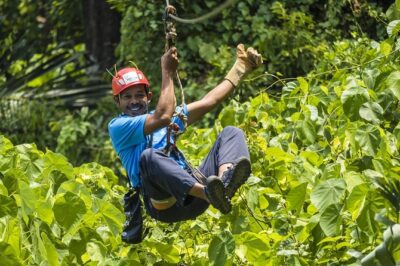
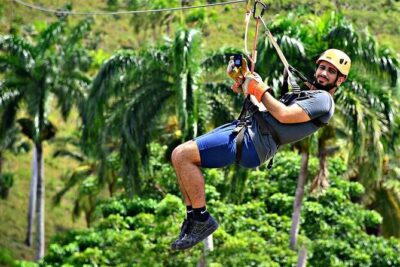
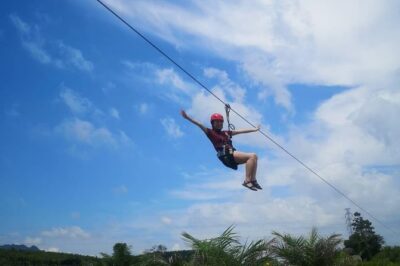
After the via ferrata, you return back by zip-line. That changes the emotional tone of the whole tour. You go from careful climbing to a fast ride that’s pure release.
The zip-line is also a built-in reward for effort. You finish a climb that’s long enough to feel real (again, about 180 meters) and high enough to keep you aware of the view. Then you get to enjoy that view again from a totally different angle—often with the feeling of motion doing some of the work for you.
In reviews, people describe the zip-line as exciting and a great match for the via ferrata adrenaline. If you’re the type who likes a finale that feels like a payoff instead of a slow walk back, this is a big reason to book.
Guides, safety gear, and how they calm first-time nerves
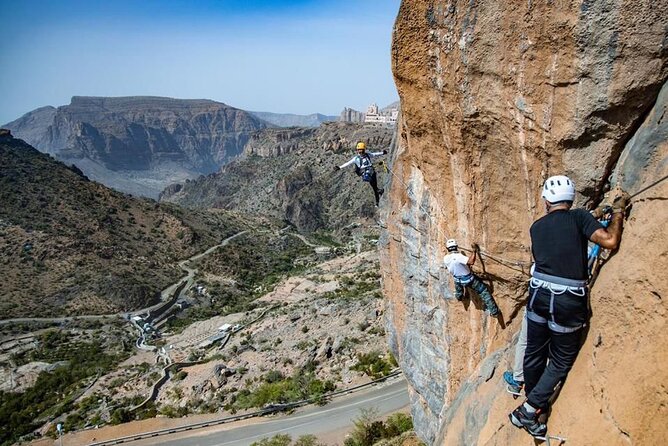
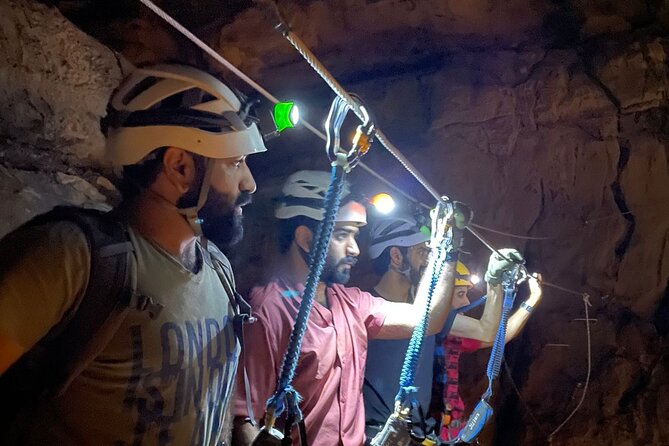
This is one of those activities where the staff quality can make or break your experience. Here, you get safety equipment, a via ferrata instructor, a helmet, and a first aider included. That coverage is not decorative. It means there’s a plan for both instruction and response.
What stands out in the feedback is consistency in friendliness and careful guidance. People call out guides by name—Maher, Khalifa, Said, Ali, and Mehmood—and that’s a strong sign that the guides are more than just operators. They’re teachers who know how to keep you moving without rushing.
A few useful patterns show up:
- The learning curve is described as smooth, not chaotic.
- Even solo travelers can go through without being treated as awkward extras.
- For some groups, there were multiple guides, with one report mentioning three guides in a small group setup. That usually means more attention and less time waiting.
If you’re nervous about heights, focus on this: the tour’s success depends on you staying clipped in and following guidance. The guides can’t remove the height feeling, but they can help you handle it. One review even frames it as scary but amazing fun, which is exactly what you should expect from any via ferrata route.
Who this adventure suits in Oman (and who should think twice)
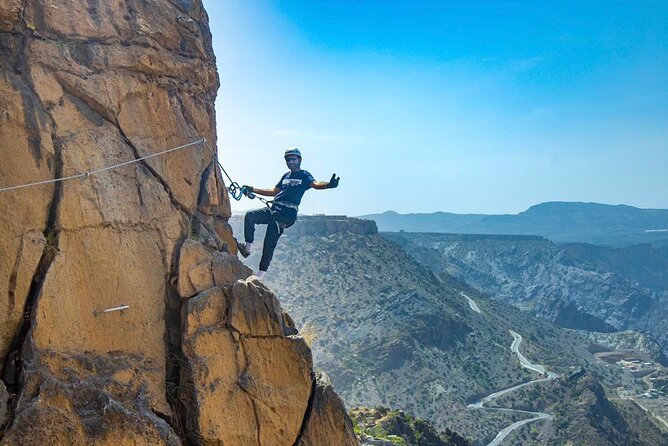
This tour is positioned as adventure for different skill levels, and the feedback supports that. People describe doing an easy-medium climb and also doing an advanced course. Some mention first time via ferrata, others compare it to other via ferrata setups (like Cloud Ladder in Estes Park), and others describe it as thrilling rather than purely technical.
That said, the company requires moderate physical fitness. In practice, that means you should be comfortable with:
- using your arms to help stabilize and move
- stepping onto metal elements while staying focused
- handling your balance while attached to a harness system
If heights make you panic, you might still do it, especially if you trust the instruction and you’re okay with feeling that first-wave adrenaline. But you should be honest with yourself: if you know you freeze when exposure hits, plan to take it slowly and listen carefully.
The tour also lists a maximum of 20 travelers, which generally helps the staff keep an eye on everyone. Less crowd pressure means fewer people competing for attention when you’re learning something new.
Timing, start location, and how to plan your day
The tour runs daily, Monday through Sunday, 8:00 AM to 5:30 PM. Duration is listed as about 2 hours. In real life, that can feel shorter or longer depending on how you move and which level you end up doing, but the time window is clear enough to slot into a travel day.
The activity starts in Jebel Akhdar, Oman, and it ends back at the meeting point. That matters because via ferrata adventures often mean getting dropped in the middle of nowhere and figuring out transport after. Here, the loop is contained.
A practical detail from the experience: one guide mentioned that the start is immediately below the Alila hotel. Even if you’re not staying there, it’s a useful mental anchor for where to look when you arrive.
If you’re coming from Nizwa or Muscat, transport can be offered for an extra charge. If you want to keep your schedule tight, factor that in early instead of treating it as an afterthought.
Also, plan ahead. This is commonly booked about 18 days in advance on average. That doesn’t mean you can’t find a date sooner, but it does mean the best time slots may go first, especially in good weather.
Price and value: is $150 fair for via ferrata + zip-line?
At $150 per person, you’re paying for a lot more than a route ticket. The included items are not trivial for an activity like this: safety equipment, a helmet, an instructor, and a first aider. That’s the core value here. The tour isn’t just selling a view; it’s selling controlled adventure.
And it’s not only a climb. You also get the zip-line ride back. That means you’re paying for two adrenaline moments in one package, without needing separate bookings.
What’s not included is gratuities, which is standard for many guided experiences. If you like staff who teach carefully and keep you safe, it’s reasonable to budget for that, even though it’s not required.
Is it expensive? It’s not cheap, but it looks fair for an Oman mountain activity where safety gear and guide attention are part of the deal. The real “value question” is whether you want an active, guided high-exposure experience rather than a viewpoint stop. If you want the latter, skip this. If you want the former, the price lines up with the work and the equipment.
Weather matters more than you think
This tour requires good weather. That’s not just legal language. A via ferrata route depends on visibility, footing, and overall conditions. If weather isn’t suitable, the experience can be canceled and you’ll be offered a different date or a full refund.
So if you’re scheduling around Oman’s mountain weather, treat this as a priority activity. Put it earlier in your trip so you have flexibility if conditions shift. If your travel plans are locked and you can’t move dates, you may want to book later days with breathing room.
Should you book this Jebel Akhdar via Ferrata and zip-line?
I think you should book if you want a guided mountain challenge that feels safe enough to learn, but exciting enough to remember. The combination of via ferrata (with a route split into Iron bridge, Steel rope, and Stair way) and the zip-line finale makes it feel like a complete adventure instead of a single segment. And the safety setup—helmet, equipment, instructor, first aider—shows you’re not paying for guesswork.
I’d pass or reconsider if you can’t handle heights, even with guidance, or if your fitness is limited to the point where climbing steps and using your arms would feel unsafe for you. Also, book with weather in mind. This is the kind of activity where you don’t want your day ruined by a forecast swing.
If you’re deciding today: this one is rated 5 out of 5 with 12 reviews and recommended 100% in the feedback summary. That’s not a guarantee, but it’s a decent signal that the guides and safety approach land the experience the way they promise.
FAQ
Where does this activity start and end?
It starts in Jebel Akhdar, Oman and ends back at the same meeting point.
How long does the via ferrata and zip-line take?
The duration is listed as about 2 hours.
How much does it cost?
The price is $150.00 per person.
What exactly is included for safety?
The tour includes safety equipment, a via ferrata instructor, a helmet, and a first aider.
Is a zip-line included after the via ferrata?
Yes. After the via ferrata, you have the chance to return by zip-line.
What are the via ferrata route details?
It’s about 180 meters long, with heights up to 45 meters, and it’s divided into Iron bridge, Steel rope, and Stair way.
What fitness level do you need?
You should have a moderate physical fitness level.
Do they offer transport from Nizwa or Muscat?
Yes. Transport can be offered from Nizwa and Muscat with an extra charge.
What happens if the weather is poor?
The tour requires good weather. If it’s canceled due to poor weather, you’ll be offered a different date or a full refund. You can cancel for a full refund up to 24 hours in advance.