REVIEW · SAN JOSE
Rainforest Zip-Line Adventure – Braulio Carrillo, Costa Rica
Book on Viator →Operated by Elite Shore Excursions · Bookable on Viator
Few things beat the sound of your own speed. This Braulio Carrillo zip-line run throws you over the Molinete River on 10 ziplines and 14 platforms, with an on-site naturalist guide to explain what’s living up there.
I especially like that the operation is built around safety first: you get a helmet, harness, and gloves, plus a real walkthrough before you ever step on the first platform. I also like the wildlife angle—between the short forest hikes, hanging bridge, and the exhibits, you’re not just doing adrenaline. One possible drawback: timing can stretch, especially if you’re booked for a half-day pass and your group ends up waiting for others to finish.
In This Review
- Quick hits for your canopy day
- First taste of Braulio Carrillo: Why this park works
- Getting there from San Jose: The Route 32 reality check
- The course itself: Molinete River ziplines, hanging bridge, and 700 meters of adrenaline
- The finale line: Adrena-Line
- Safety briefing and gear: What you’ll actually wear
- Between the zips: Wildlife talks, exhibits, and quick nature walks
- Timing, lunch options, and why half-day might not feel half
- Price and value: Is $70.20 worth it?
- Who should book this (and who might not)
- Who this fits best: Families, couples, and adrenaline-within-reason
- Final verdict: Should you book the Braulio Carrillo zip-line?
- FAQ
- How long does the zip-line adventure take?
- How many ziplines are included?
- Where is the meeting point?
- Is hotel pickup included?
- What safety gear do I get?
- What are the minimum age, height, and maximum weight?
- What’s the longest zip line on the course?
- Is lunch included?
- Do the guides speak English?
Quick hits for your canopy day
- 10 ziplines, 14 platforms across treetops, with guides staying with you the whole way
- Adrena-Line finale: 700 meters long, about 60 meters up, and speeds up to 55 km/h / 34 mph
- Hanging bridge + forest trail to reach the course, before you fly
- Safety culture shows up in reviews, with guides like Rigo, Marcus, Oxana, Moses, Marco, and Roberto praised for clear instructions
- Plan for weather: rainforest rain can be intense, and you’ll want rain gear that works under a harness
First taste of Braulio Carrillo: Why this park works
Braulio Carrillo isn’t just a backdrop. The zip-line course is set inside a large protected reserve (1,174 acres / 475 hectares), so the day feels tied to nature—not a strip-mall version of adventure.
What makes this tour especially fun is that it mixes fast action with real interpretation. You’re not only looking down at your speed; you’re also getting guided notes on local flora and fauna from a naturalist on site. When I read about guides who point out animals and plants as you move from platform to platform, that’s the kind of detail you remember later.
The other reason this one hits is the structure of the course. The experience ramps up: you start with a shorter river crossing, then build to longer, higher cables. By the time you reach the big ending line, it feels earned.
Getting there from San Jose: The Route 32 reality check
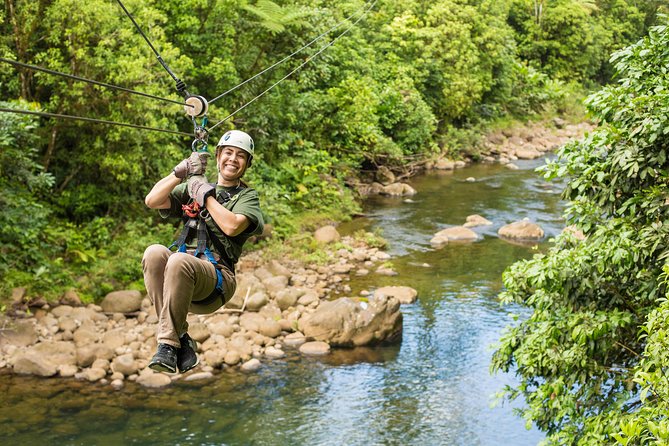
You’ll base out of Rainforest Adventures Braulio Carrillo along Route 32, next to Braulio Carrillo National Park. The ride from San Jose takes about 45 minutes, but I’d treat your whole day as elastic because San Jose traffic can be brutal.
Hotel pickup is available if you choose it, otherwise you’ll meet at the activity location. Either way, you should expect a drive through rolling hills and coffee country on the way in—part road trip, part anticipation.
A practical note: your return timing can be affected by traffic and by how long your group finishes at the park. Some people find that a listed half-day turns into a much longer day once you factor in waiting.
The course itself: Molinete River ziplines, hanging bridge, and 700 meters of adrenaline
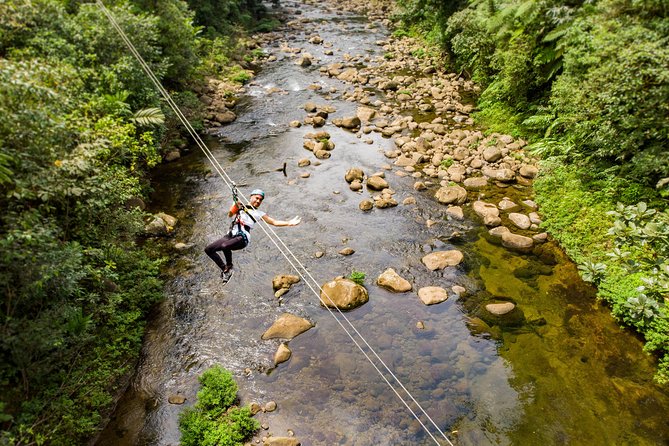
The day starts with access to the course: a walk along a forested trail, then a hanging bridge that spans the Molinete River. That first crossing gives you a preview of the course—how high you’ll be, how the harness feels, and how the guides guide you.
Then you climb to the top of the first platform and run your first line: about 80 meters (263 feet) that crosses the river. It’s short enough to settle your nerves, but long enough to feel your feet leave the platform with real conviction.
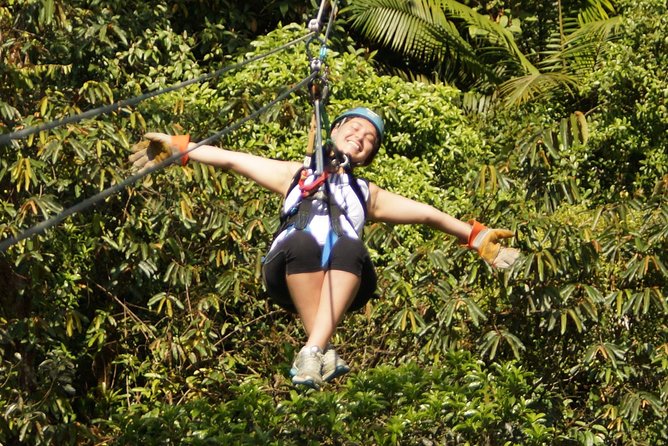
From there, you zip across a total of 10 ziplines and 14 platforms, flying through the canopy with cables routed between treetops. The trees mentioned for the course include caobilla, and the guides help you focus on technique so you don’t just hang on—you enjoy it.
The finale line: Adrena-Line
The highlight is the Adrena-Line: 700 meters long (about 2,297 feet), flown at around 60 meters high (about 197 feet). Speeds can reach up to 55 km/h / 34 mph, which is fast enough to feel the wind in your face, even with your gear on.
If you’re the type who worries about heights, this is also where careful guidance matters. Reviews praise guides for helping people conquer fear of heights, and that matches how these courses are typically run: you’re not thrown into chaos. You’re coached so you can move, breathe, and ride.
Safety briefing and gear: What you’ll actually wear
Before you fly, guides provide a safety orientation and fit you with the required equipment: helmet, harness, and gloves. The guides are right there on the course, not just at the start, which is what you want when you’re learning how to ride with confidence.
Multiple reviews talk about staff making procedure feel clear and calm. People also mention bilingual guidance, with some guides credited for very good English. That matters because you’re trusting your life to a system you don’t want to guess your way through.
One small but important consideration: rainforest weather is unpredictable, and you may be soaked. Reviews emphasize that you’ll need rain gear that can fit under a harness. A basic poncho can still work, but you’ll want something you can move in and that won’t bunch up where the harness straps sit.
And if you’re sensitive about hygiene: one reviewer suggested washing straps/harness between uses. You can’t assume what every site is doing day to day, but it doesn’t hurt to ask what cleaning process is followed and to bring hand wipes for peace of mind.
Between the zips: Wildlife talks, exhibits, and quick nature walks
This is one of those tours where the “wait time” doesn’t have to feel wasted. There are rainforest walks in and around the property, plus small exhibits and interpretive areas where you might see displays related to snakes, frogs, sloths, and butterflies.
Some people also spot wildlife around the walking trails—things like sloths and toucans are specifically mentioned. Others report seeing larger animals wandering nearby, such as anteater and tapir sightings.
Even if you don’t see everything, the value is in the guidance. A naturalist-style explanation makes the forest feel less like a blur of green and more like a system. When guides name plants, point out signs of animals, or explain what you’re likely to encounter, the entire day feels more intentional.
Timing, lunch options, and why half-day might not feel half
On paper, the zip-line circuit is about 2 hours 30 minutes. In real life, your total day depends on pickup timing, group size, and how long you wait for your turn across the stations.
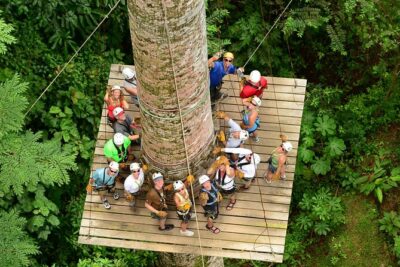
This park has a maximum of 15 travelers, which generally keeps things organized. Still, you can have gaps between lines. If your group includes people doing more than just the zip-line, and you’re signed up for only the zip-line portion, you might spend extra time waiting while others finish.
Lunch is where expectations can get tricky. Lunch is only included if you select the lunch option. Even then, a few reviews mention lunch may not show up correctly in the reservation and that you might end up paying on site. The good news is that food is available on site, and reviews describe it as reasonably priced, including items like chicken and rice.
The biggest practical takeaway: if you pick the “half-day” option, don’t schedule anything important that evening. Build in buffer time for traffic and timing shifts, because it’s possible to get back later than you planned.
Price and value: Is $70.20 worth it?
At $70.20 per person, this is priced like a mid-range adventure with real engineering behind it. For that money, you’re not just paying for one thrill. You’re paying for:
- 10 separate zip segments (not a single long ride and done)
- Professional safety setup (helmet, harness, gloves, and active guidance)
- A big finale line that’s long and high by zip-line standards
- Nature interpretation from the on-site naturalist plus exhibits and walking trails
- On-site facilities like bathrooms and lockers (mentioned as available at no charge in reviews)
Where the value question gets personal is the time you’ll spend. If you end up waiting longer than expected, the “2.5 hours” can feel like a smaller slice of your day. But if you go in prepared for a full outing, the experience itself delivers—especially the Adrena-Line finale.
Who should book this (and who might not)
This tour is best for people with at least moderate physical fitness. You’ll do walking to reach the platform system, and you’ll move through forest trails and between stations. The minimum age is 5, minimum height is 120 cm / 3’11”, and the maximum weight is 300 lb / 136 kg.
If you have a fear of heights, you can still enjoy this—reviews highlight that guides can be gentle and supportive when you’re nervous. If you’re not comfortable getting wet in a tropical rainstorm, bring proper rain gear and a plan for staying warm afterward.
Who this fits best: Families, couples, and adrenaline-within-reason
This is a strong choice for:
- Couples looking for a shared adrenaline moment with a nature setting
- Families who want movement and a structured activity (guided, gear-based, and supervised)
- Solo travelers who like meeting a small group (max 15) and getting clear instructions
In reviews, people also described it as a great first-day activity in Costa Rica because it’s close enough to San Jose to make logistics manageable, while still feeling wild.
Final verdict: Should you book the Braulio Carrillo zip-line?
Yes, I’d book it if you want a well-run canopy adventure with a serious finale. The combo of 10 ziplines, the 700m Adrena-Line, and naturalist-style explanations makes it more than just a thrill ride.
Just go in with two smart expectations:
1) Pack for rain, and bring rain gear that will work with a harness.
2) Don’t trust half-day scheduling too literally. Traffic and group pacing can stretch the day.
If that sounds fine, you’ll likely come away feeling like you did something genuinely Costa Rica—high in the canopy, fast over the river, and backed up by a team that takes safety seriously.
FAQ
How long does the zip-line adventure take?
It lasts about 2 hours 30 minutes on average.
How many ziplines are included?
You’ll ride 10 ziplines and use 14 platforms.
Where is the meeting point?
The tour starts at Rainforest Adventures Braulio Carrillo on Route 32 next to Braulio Carrillo National Park. The activity ends back at the meeting point.
Is hotel pickup included?
Hotel pickup is included only if you select the pickup option. Otherwise, you’ll meet at the park.
What safety gear do I get?
You receive a helmet, harness, and gloves, along with a safety orientation from the guides.
What are the minimum age, height, and maximum weight?
Minimum age is 5 years. Minimum height is 120 cm (3’11”). Maximum weight is 300 lb (136 kg).
What’s the longest zip line on the course?
The Adrena-Line is 700 meters long and flown at about 60 meters high, with speeds up to 55 km/h (34 mph).
Is lunch included?
Lunch is included only if you choose the lunch option. Food is also available on site.
Do the guides speak English?
The tour description and reviews indicate guides are friendly and bilingual, including guides who speak English well.