REVIEW · JUNEAU
Alpine Zipline Adventure in Juneau, AK
Book on Viator →Operated by Kawanti Adventures · Bookable on Viator
Rain or shine, the treetops are the star. On this Douglas Island course from Juneau, I like how the action is wrapped in old-growth canopy views and enclosed treehouse platforms where you can land, breathe, and snap photos without rushing. It also keeps things varied with a suspension bridge over a rushing stream and a final crack-at-it moment with axe throwing.
What I really like next is the way the team sets you up to feel safe fast. You get a safety briefing plus optional practice zips, and the gear is described as impressive and up to the task—plus staff members like Keagan and Anya are called out for being supportive when people feel nervous.
One thing to weigh is effort and limits. There’s a moderate physical fitness expectation and a weight range (70 to 250 pounds), and while the activity runs in weather conditions, Juneau can still throw enough rain and wind that you’ll want to be prepared and flexible.
In This Review
- Key moments that make this zipline special
- Entering the Douglas Island canopy from Juneau
- Mt. Roberts Aerial Tram Parking Lot to Eaglecrest Lodge: the ride matters
- Safety briefing, practice zips, and the gear confidence factor
- Tongass National Forest canopy runs: treehouse landings for photos and calm
- What the staff does right when you’re nervous
- Crossing the rushing stream suspension bridge
- Axe throwing after the zips: fun, controlled, and surprisingly satisfying
- Who this zipline fits best in Juneau
- Price and value: what $257.25 includes, and why it adds up
- Weather in Juneau: dress for rain, but know you might reschedule
- Time budgeting if you’re on a cruise or short Juneau stay
- Should you book Alpine Zipline Adventure with Kawanti Adventures?
- FAQ
- How long is the Alpine Zipline Adventure near Juneau?
- Where do I meet for pickup and where does the tour end?
- What’s included in the price?
- Is food included?
- Does it run in bad weather?
- What are the weight limits and fitness expectations?
Key moments that make this zipline special
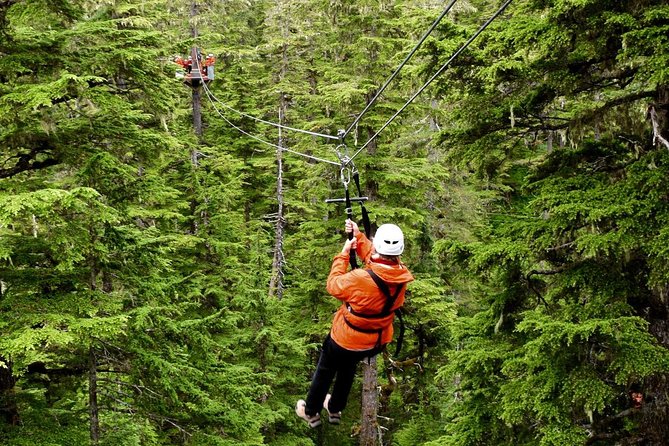
- Douglas Island old-growth canopy: you’re up high in the Tongass National Forest, not just hopping along a flat line
- Fully enclosed treehouse platforms: land inside, take photos, and reset comfortably
- No hand-braking zip system: fewer moving parts for you to manage while you ride
- Suspension bridge over a rushing stream: adds a different kind of balance challenge mid-adventure
- Axe throwing at the end: a fun switch from soaring to controlled swings
- Small-group feel (max 24): enough people to have energy, not so many that you’re waiting all day
Entering the Douglas Island canopy from Juneau
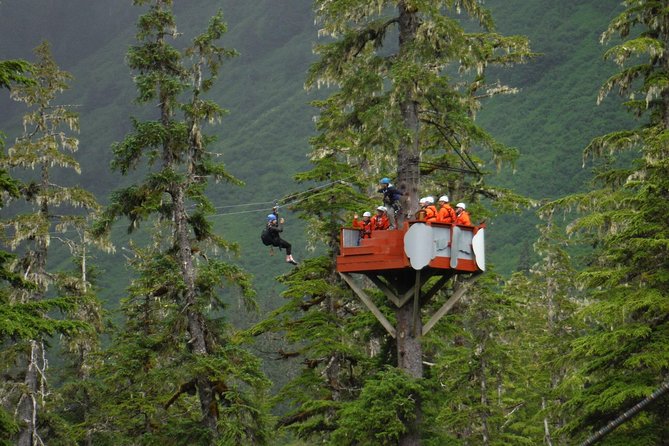
This is an alpine zipline experience built around one big idea: you’ll spend your time in the treetops above Douglas Island, near Juneau, where the Tongass National Forest makes everything feel bigger. You’re not just moving from start to finish. You’re stopping, watching, and resetting—so the adventure feels like several mini-moments rather than one long blur.
The course also has a nice “progression” feel. You start with briefing and optional practice, then you move into the main runs, then you transition to the stream crossing, and finish with axe throwing. That pacing matters, especially if heights make you hesitate.
If you’re a first-timer, you can still expect to get that “oh wow” factor—people describe it as fun even when they were worried at the start. And if you’ve zipped before, you’ll likely appreciate the variety (tree platforms, bridge, then axes) instead of repeating the same pattern over and over.
Mt. Roberts Aerial Tram Parking Lot to Eaglecrest Lodge: the ride matters
Your day starts at 490 S Franklin St, Juneau, AK 99801, where you meet up for the transfer. From there, you’ll head toward Eaglecrest Lodge by way of the Mt. Roberts Aerial Tram area, then continue through the flow of the adventure.
I like that the package includes an air-conditioned vehicle. In Alaska, that can matter more than you’d think, especially in shoulder seasons when the weather changes fast. It also cuts down on stress. You’re not trying to coordinate your own transport while you’re already excited and nervous.
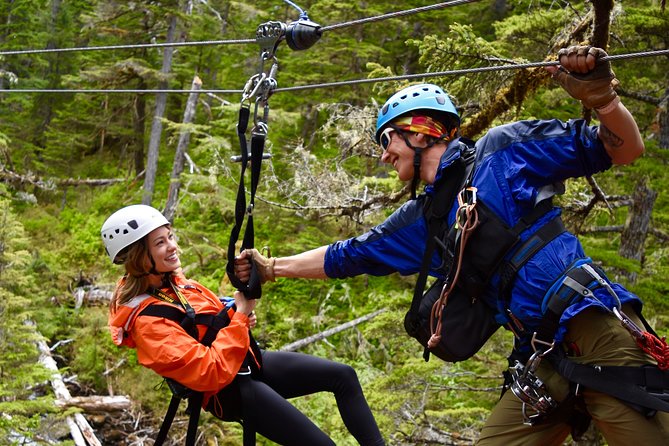
After you arrive at the zipline base area, you’ll be fitted for your equipment. This part is practical, and it sets the tone: you get guided direction, you learn how to clip in and move around safely, and you’re not left to figure it out alone. People mention the staff being professional and helpful, which is exactly what you want before you’re hanging out over forest.
Safety briefing, practice zips, and the gear confidence factor
This is the moment that can make or break your comfort level. The course gives you a safety briefing and includes state-of-the-art gear, and you also have the option of practicing before you go live on the main course.
You’ll see why that matters when you read how often people comment on feeling safe even if they were scared of heights. Guides are praised for being patient, and I think the optional practice is a big part of that. It turns fear into information.
Another detail I really appreciate is the no hand-braking setup. That means you aren’t actively wrestling with stopping techniques while you’re trying to enjoy the view. You can focus on where you’re looking, how you’re sitting, and when you’re landing—rather than how to control speed with your hands.
Tongass National Forest canopy runs: treehouse landings for photos and calm
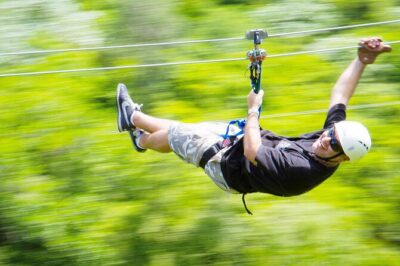
Now for the part you came for: soaring through the canopy on alpine zipline routes. You’ll ascend through the Tongass National Forest toward Eaglecrest Lodge, then glide over old-growth trees where the scale feels real.
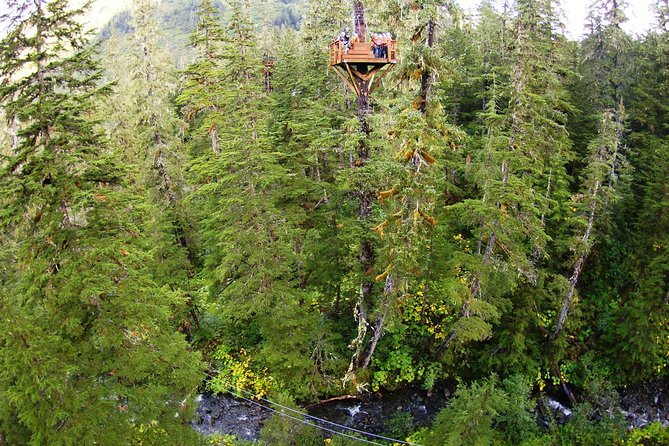
The standout feature here is the landings. Instead of just zipping into the next platform like a simple conveyor belt, you land in fully enclosed treehouse platforms designed for the moment. That enclosure helps with two things: it gives you a safer-feeling place to reset, and it makes it easier to take photos without feeling like you’re fighting wind or dropping your phone in the moment.
Even if you don’t care about photos, these stops change the whole feel of the tour. You get brief pauses to look around, listen to the forest, and notice the Alaska details—the kind that you miss when you’re rushing on a trail.
One guest even described an 800-foot run as a highlight at the end of the course sequence. You may not need that specific number to appreciate it. The important thing is that there’s at least one longer ride that makes the whole experience feel like a “real” alpine adventure, not just a series of short hops.
What the staff does right when you’re nervous
The best praise in the reviews isn’t about thrills. It’s about people. Guides are repeatedly described as friendly, supportive, and good at helping different comfort levels. That shows up in stories where riders said they were scared and still had a safe, doable time.
Names that come up include Keagan and Anya for standout guiding, and Rylie and Maggie for encouraging support. Caroline is also mentioned for being excellent. When you see that kind of consistency, it’s a sign the team isn’t just enforcing rules. They’re actively managing the human side: nerves, first-timers, and people who just need extra reassurance.
If you’re traveling with kids or someone who learns best with extra prompts, pay attention to this. One review mentions staff being respectful and supportive with an autistic teen who loved each run. That suggests the team understands how to keep the pace steady and the guidance clear.
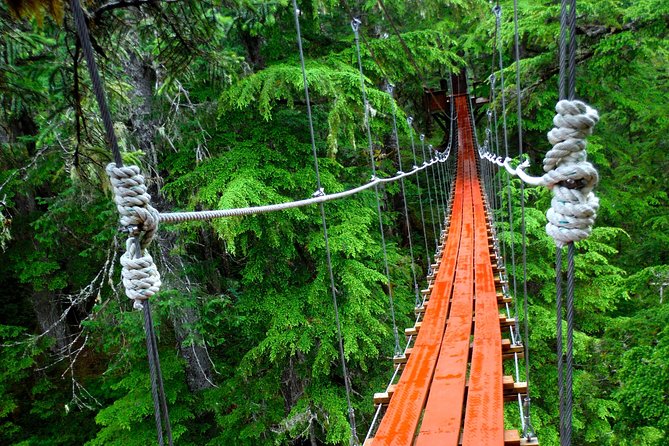
Crossing the rushing stream suspension bridge
Between zip runs, you’ll cross a suspension bridge over a rushing stream. This isn’t just a scenic break. It adds a different physical feel—more step-by-step balance and slower movement—right when you might be riding adrenaline from the last line.
I like that this segment exists because it makes the tour feel like an actual “adventure route.” You’re not doing the same motion repeatedly. You’re switching gears: zip, land, move, cross, then continue.
You should treat it like a real bridge crossing—stay focused on your footing and follow the guide’s instructions. If you’re okay with the zipline concept but still unsure about heights, this bridge segment is where you’ll learn whether you can handle open-air movement calmly.
Axe throwing after the zips: fun, controlled, and surprisingly satisfying
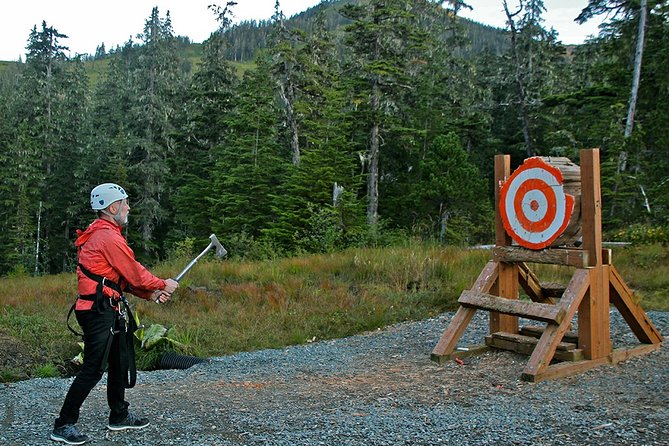
After you finish the main zipline elements and the bridge crossing, you’ll end with axe throwing. This part is a good mental reset. You’ve been clipped in and moving through the trees; now you’re standing on solid ground, aiming and swinging with supervision.
The tour description frames it as a way to embrace your inner lumberjack. I think it also works as a reward. The adrenalin has peaked, you’ve done the scary parts in the treetops, and now you get something that feels hands-on and playful.
Because food isn’t included (unless specified), plan to keep your energy up. Axe throwing can feel like the last activity that sneaks up on you when you’re tired from the morning. If you’re prone to getting hungry, bring snacks if allowed by your schedule, or plan to buy something before you get hungry.
Who this zipline fits best in Juneau
This experience is built for people with moderate physical fitness. That phrase matters. You don’t need to train like a climber, but you should be comfortable standing, walking on uneven ground, and moving through a course with equipment on.
Weight limits are also real: minimum 70 pounds (32 kilos), maximum 250 pounds (113 kilos). That’s not a small detail—so if you’re near the edge, confirm you fit before spending time on the decision.
As for confidence and age: reviews include people who were 54, 71, and 75 who said they were nervous but managed well. There’s even mention of a group stretching from ages 8 to 90. I wouldn’t treat that as a guarantee for every body, but it’s a strong signal that the course can be approachable with the right support.
You might want to think twice if:
- heights make you spiral into panic and you’re not comfortable using a practice run to build confidence
- you have limitations that make moving with harness gear stressful (even if you can stand and walk)
- you need a food included package, since food and drink aren’t listed as included
Price and value: what $257.25 includes, and why it adds up
At $257.25 per person, this isn’t a cheap add-on. But it also isn’t “just a zipline ticket,” and that’s the difference.
You’re paying for:
- guided safety briefing and included equipment
- transportation by air-conditioned vehicle
- time on an alpine zip course through the Tongass canopy, with stops designed for photos
- a suspension bridge segment
- an axe throwing finale
For Juneau, that bundle can be good value if you’re doing multiple activities in a single half-day. You also have a maximum group size of 24, which helps keep the experience from feeling like a factory line.
When people say it’s worth the money, they’re usually reacting to three things at once: smooth organization, safety confidence, and not having to manage extra logistics. This tour’s setup fits that pattern.
Weather in Juneau: dress for rain, but know you might reschedule
The activity operates in all weather conditions, so don’t plan on waiting for perfect sunshine. You’ll want clothing that handles rain and damp ground, and you should expect the course to feel colder and slicker than you might guess.
At the same time, the experience requires good weather, and if it’s canceled due to poor weather, you’ll be offered a different date or a full refund. I treat that as a normal Alaska reality: they’ll run as much as possible, but they still keep safety rules.
Pack like you’re going to be outside in wet conditions: a waterproof layer you can move in, footwear with grip, and something to keep your hands and phone protected. If you’re bringing a phone, keep it secured the way the guides show you. One story mentions a guest dropping a phone during the last zip, and the team helped retrieve it—which is reassuring, but it’s still better to prevent the problem.
Time budgeting if you’re on a cruise or short Juneau stay
The tour runs about 3 hours 30 minutes. That’s long enough to feel like a real experience, but it’s short enough to fit into many Juneau schedules.
The meeting and return both anchor you at Mt. Roberts Aerial Tram Parking Lot / the downtown meeting point area, so you aren’t constantly switching locations. That also helps if you’re trying not to rush after an early morning excursion.
If you’re coming from a cruise schedule, plan for the reality of changing conditions and timing buffers. One review notes a short, easy hop by boat from the cruise dock to Douglas Island. Even if your exact plan differs, build in the usual travel slack. In Juneau, weather can shift the day faster than you expect.
Should you book Alpine Zipline Adventure with Kawanti Adventures?
Yes, if you want a real Douglas Island canopy experience with more than just zips. I’d book it if you like the idea of enclosed treehouse landings, guided safety confidence, and a finale that isn’t just more flying—axe throwing makes it feel complete.
I’d think twice if you’re very sensitive to heights and you know you won’t be able to use the optional practice to settle in. Also be sure you meet the 70–250 pound weight range and that moderate physical movement is comfortable for you.
If you’re in Juneau and you want one activity that hits views, action, and a fun ending, this one is built for that. Just show up dressed for rain, listen to your guides, and let the course pace do the work.
FAQ
How long is the Alpine Zipline Adventure near Juneau?
It runs about 3 hours 30 minutes, including the safety briefing, zipline course, bridge crossing, and axe throwing, with drop-off back at the meeting point.
Where do I meet for pickup and where does the tour end?
You meet at 490 S Franklin St, Juneau, AK 99801, and the tour ends back at the same meeting point.
What’s included in the price?
The tour includes all necessary zipline equipment, a safety briefing, an air-conditioned vehicle, and the activities on the course (including the suspension bridge crossing and axe throwing).
Is food included?
Food and drink are not listed as included unless specified.
Does it run in bad weather?
It operates in all weather conditions and you should dress appropriately, but if it is canceled due to poor weather, you’ll be offered a different date or a full refund.
What are the weight limits and fitness expectations?
Minimum weight is 70 pounds (32 kilos) and maximum weight is 250 pounds (113 kilos). The tour is listed as requiring a moderate physical fitness level.